
 Exploring
Cryo Day
Bring advanced recovery experiences directly to work.
Corporate wellness that pays employees for measurable improvement.
Better health.Stronger connections.Real rewards.
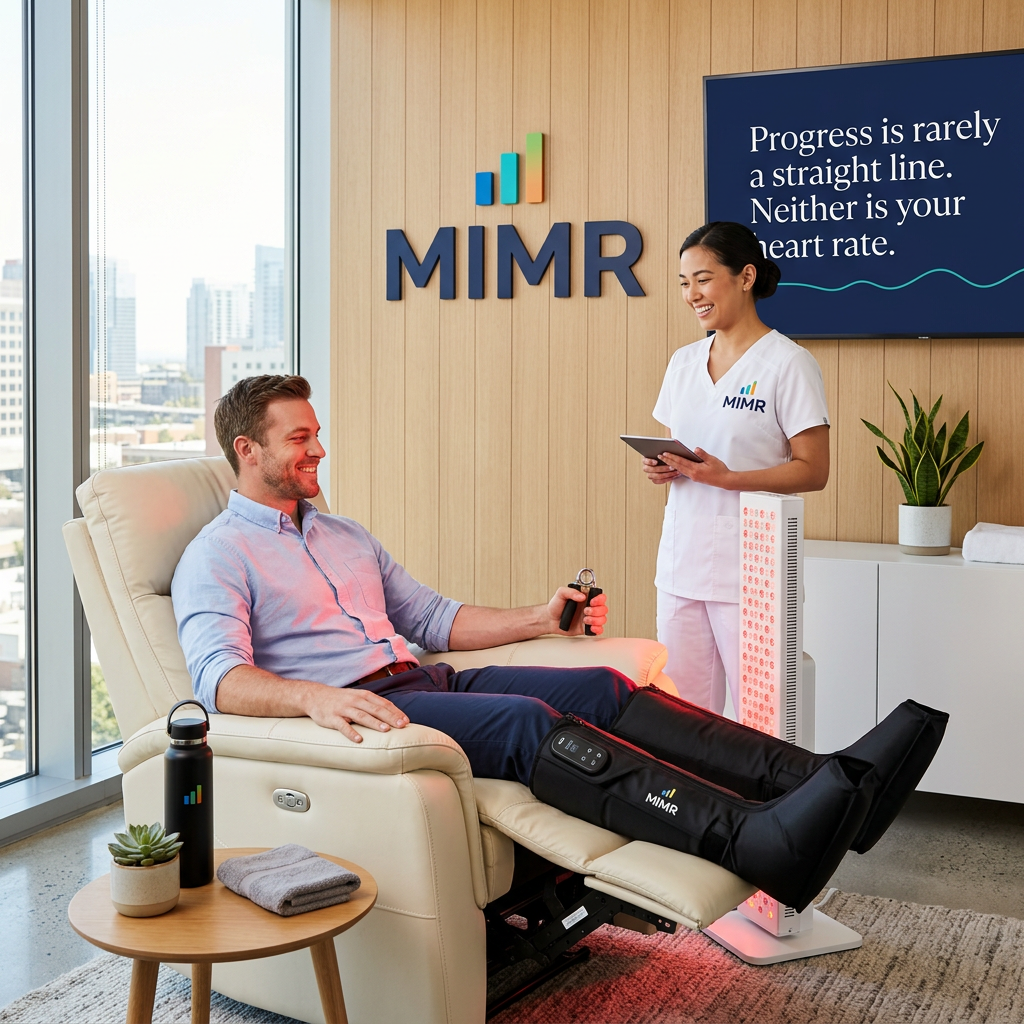
An on-site Recovery Room and app where employees measure their health and performance, improve it, and earn cash and points for their progress.
MeasureImproveMeasureReward
You invest heavily in recruiting, compensating, training, and retaining your employees. But stress, burnout, disengagement, and turnover can quietly erode the return on that investment.
The two costs of an underperforming workforce
Hard costs
Soft costs
Some costs appear on your P&L. Others hide in plain sight.
Explore the potential economic value of even a modest improvement in workforce productivity.
Illustrative result
$1,000,000
Illustrative annual productivity-equivalent value
Illustrative scenario only. Productivity-equivalent value is not the same as realized revenue, profit, or cash savings. Actual financial outcomes depend on operational conditions and measurable performance improvements. MIMR has not yet established these results through its pilots.
The opportunity isn't necessarily to spend more on employees. It's to get more value from the investment you've already made.
What if you could get more from the workforce you've already invested in?
MIMR brings accessible, engaging, and measurable recovery into the office. Start by sizing the opportunity in your own workforce.
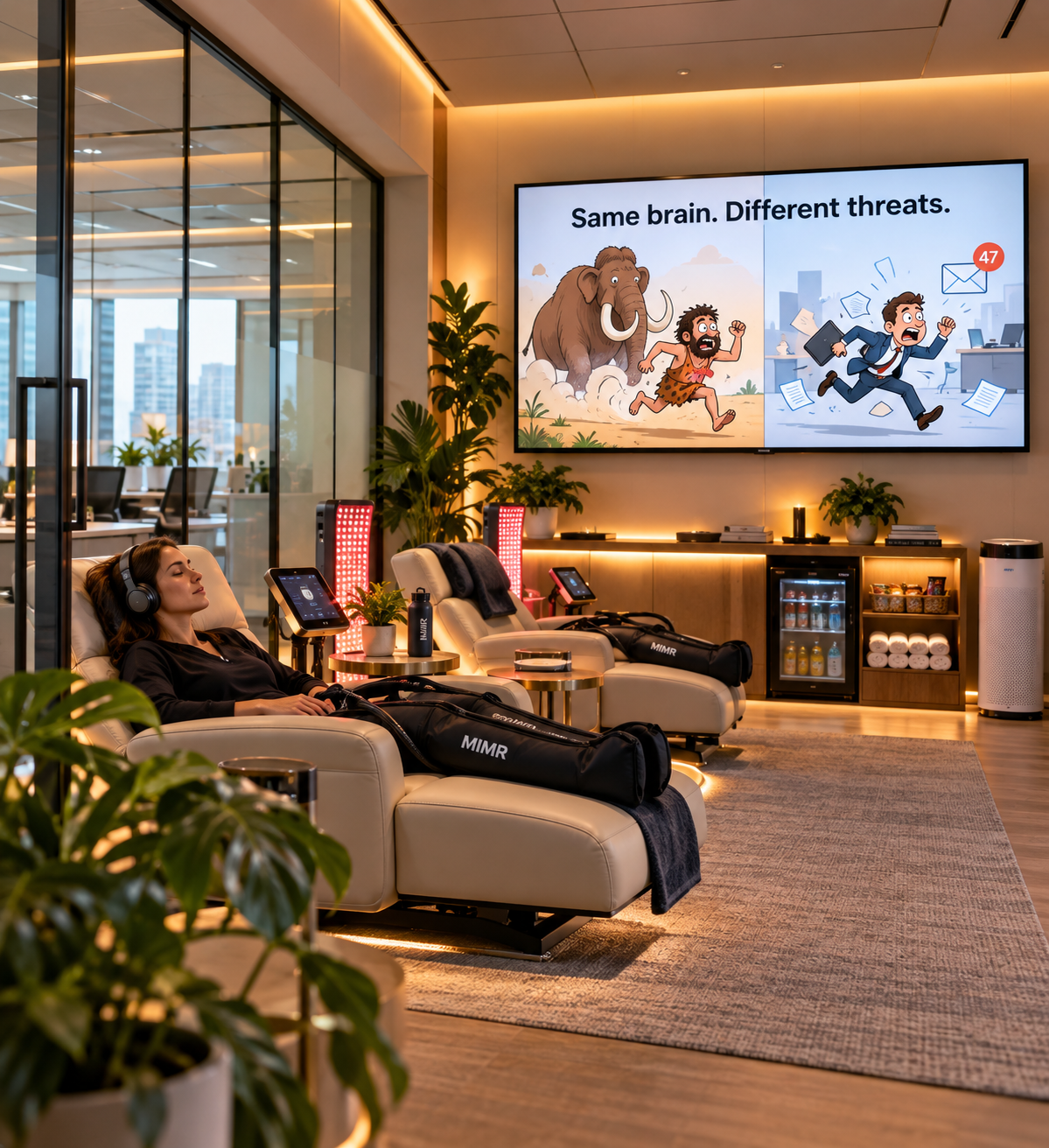
Traditional wellness programs often measure participation. MIMR is designed to go further, establishing baselines, tracking individual improvement, and investigating whether better well-being and engagement translate into meaningful business outcomes.
Participation-based wellness
MIMR
Measure what changes. Learn what works. Invest in what delivers.
See how MIMR worksTraditional wellness dashboards show participation. MIMR shows progress.
MIMR Intelligence Console
Group-level trends across a sample program
Overall Improvement Index
78/ 100
+18 points
from baseline of 60
Index = average of the four domain scores below.
Key Health Domains
Cardiovascular
6682
+16 ptsCardiovascular: baseline 66, latest 82.Strength
5876
+18 ptsStrength: baseline 58, latest 76.Recovery
5274
+22 ptsRecovery: baseline 52, latest 74.Cognition
6480
+16 ptsCognition: baseline 64, latest 80.Interventions under test
Usage this month vs. monthly goal
Red Light Therapy
3,840 min
142 employees · avg 27 min each
Cyclic Sighing
1,260 sessions
5-minute guided breathing
Cold Exposure
610 sessions
Avg 3 min per session
Outcomes are compared against baseline once each test reaches its 12-week follow-up.
Program Engagement
91%
Employee participation
87%
Returned for repeat sessions
76%
Re-measured & improved
Measure outcomes. Test interventions. Discover what works. Improve continuously.
Illustrative dashboard. Data shown for demonstration purposes only.
Individual results stay private. Employers only see de-identified group trends, with minimum group sizes to protect identities.
A simple cycle of measurement, personalized recovery experiences, re-measurement and rewards helps employees feel better, perform better and build lasting healthy habits.
Establish a personal baseline with quick, non-invasive measurements.
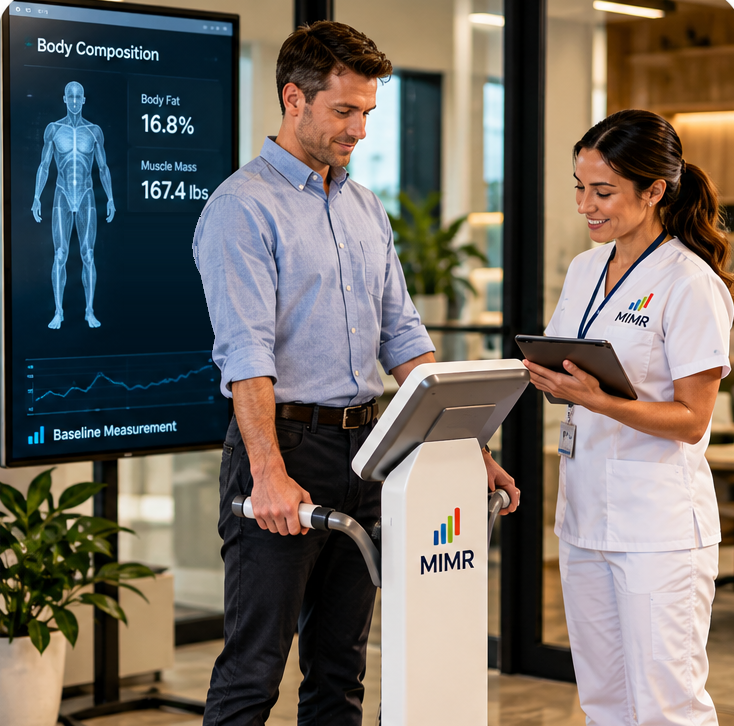
Baseline captured
5 measurements
Spend about 20 minutes in a personalized recovery experience.
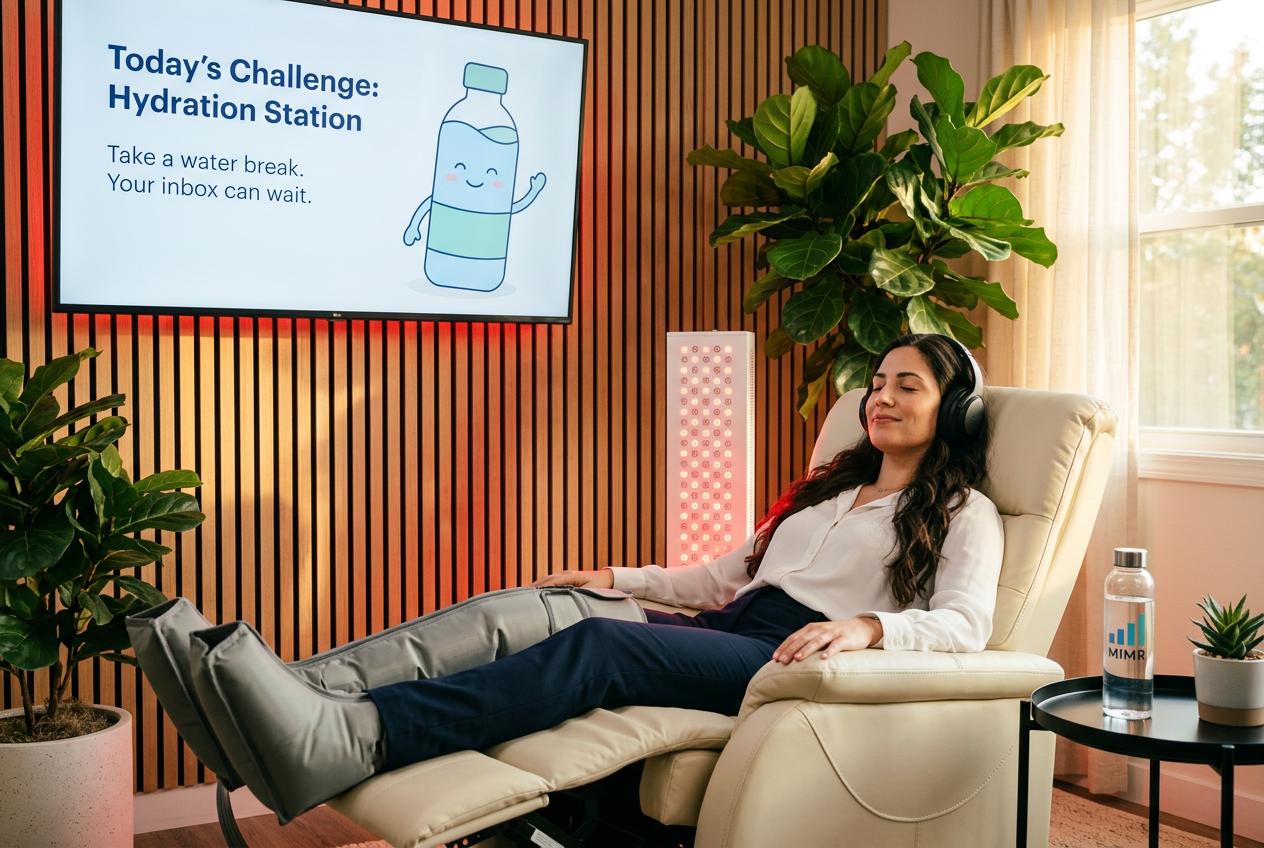
20 min session
Re-measure to see objectively what changed.
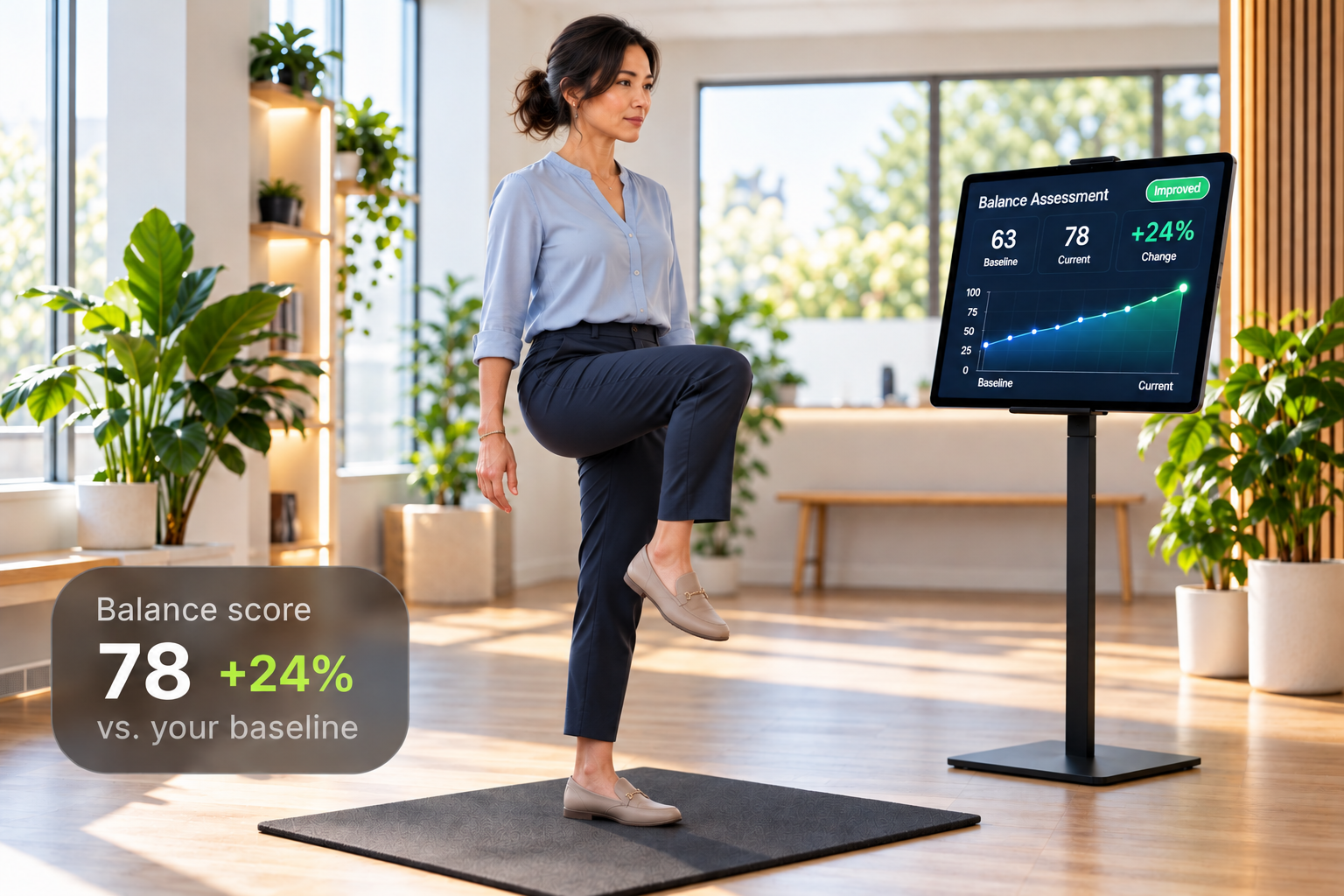
Balance score
78+24%
vs. your baseline
Recognize measurable progress with real rewards.
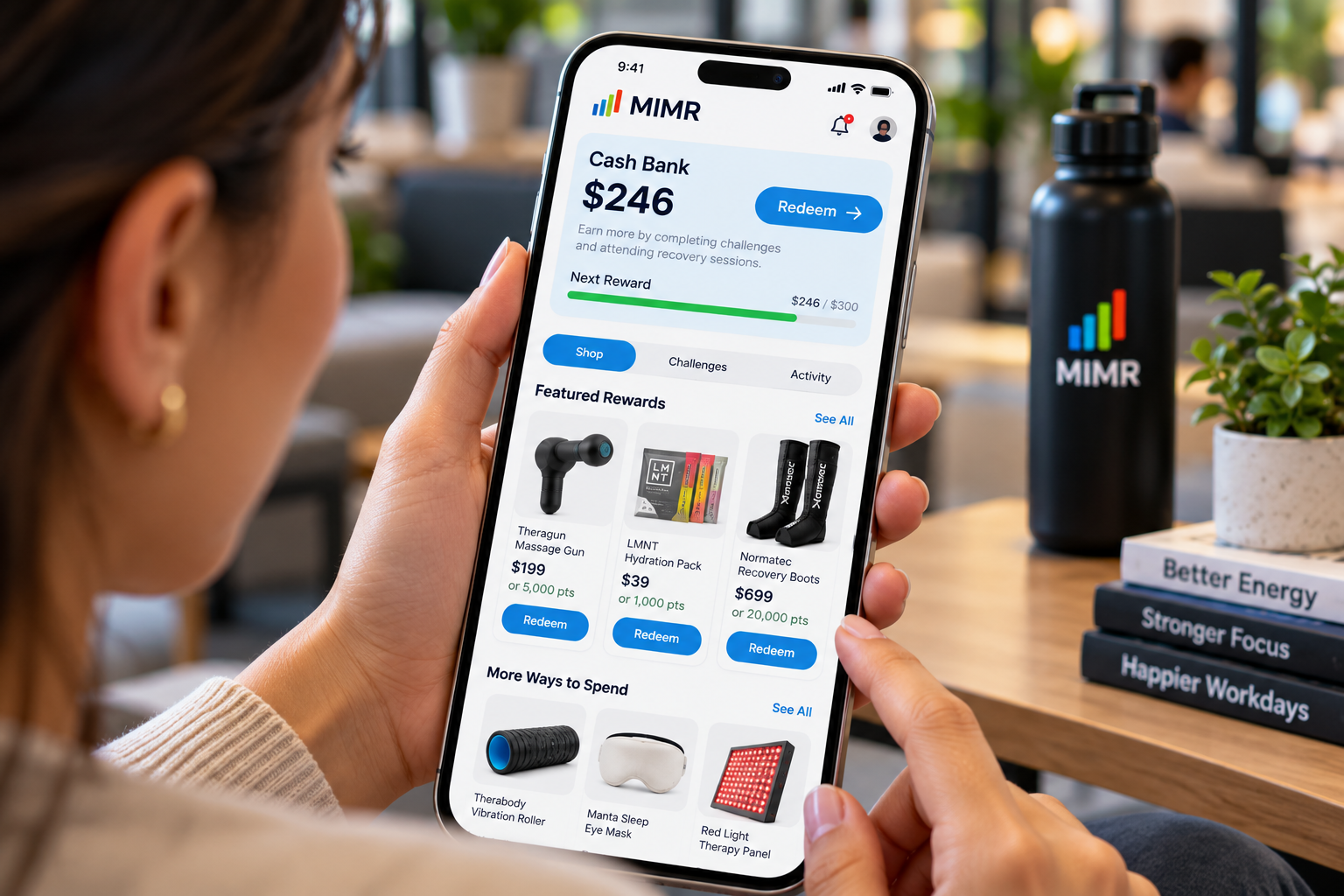
Every 90 days, the cycle restarts with a new focus and a new reward, timed to land before the last one fades.
A physical space at work designed around measurement, recovery, experimentation, and improvement.
No workout clothes. No sweating. No lectures about eating more vegetables.
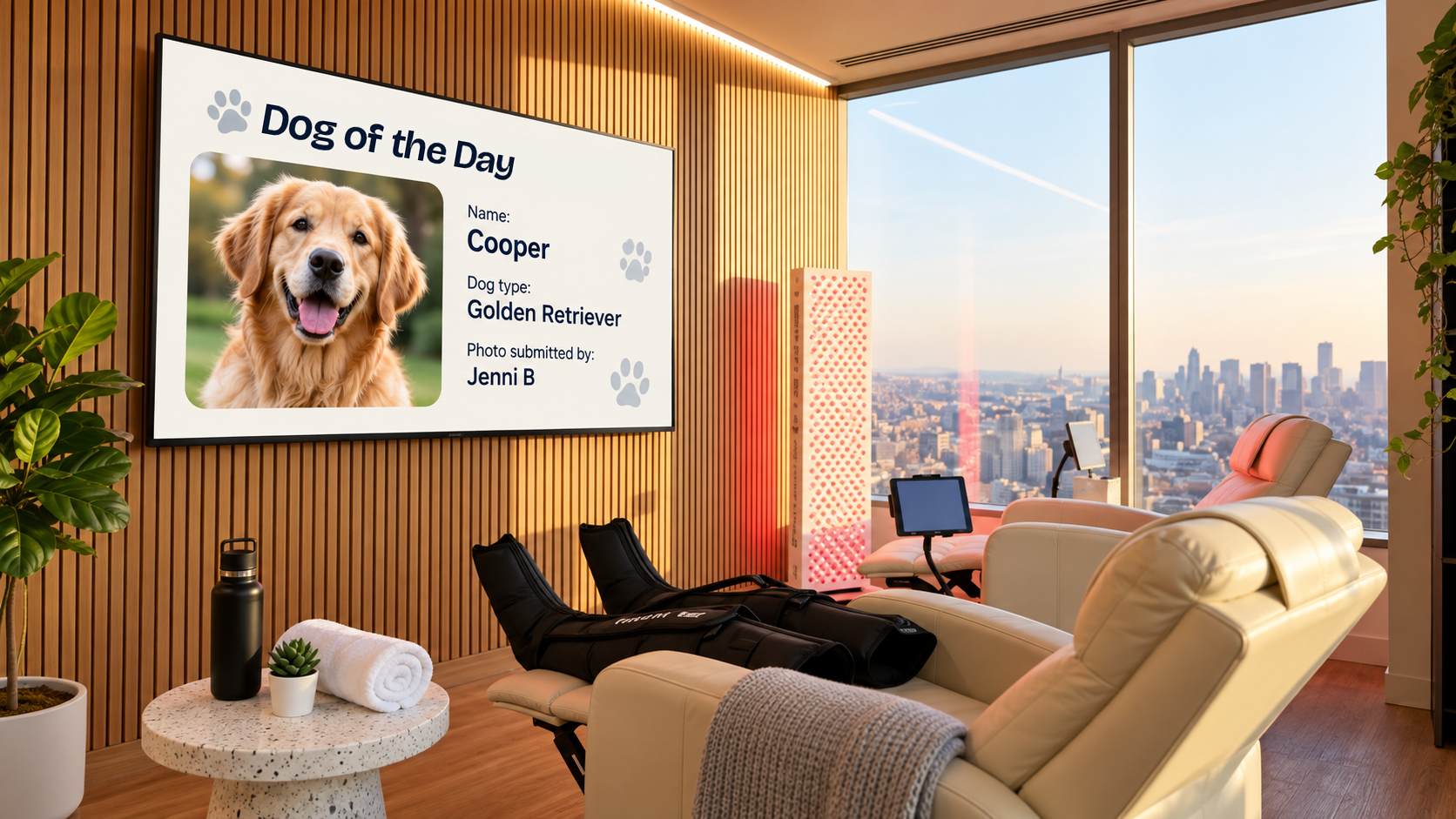
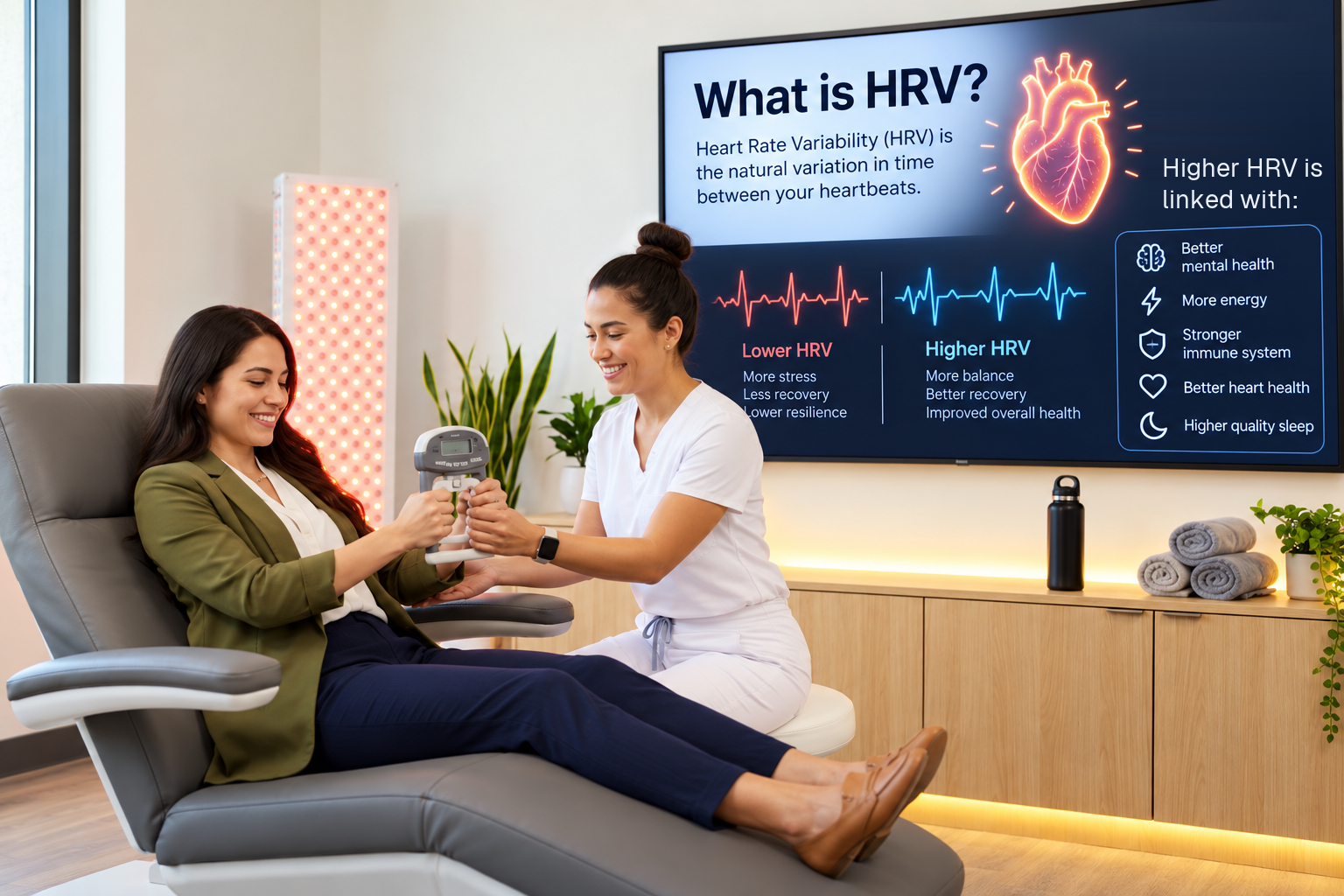
MIMR is about testing, learning, and measuring — not assuming an intervention worked. Not every intervention changes every measurement.
MIMR has deep roots in cardiology. The Recovery Room protocol is being developed with input from practicing cardiologists who work closely with our team.
People don’t come to the Recovery Room to discover what’s wrong with them. They come to discover how much better they can feel.
They just have to improve.
MIMR is designed around personal progress — not rewarding only people who are already fit or healthy. Employees start from their own baseline, with goals that account for different abilities and starting points. Progress looks different for everyone, and maintaining strong health matters too.
The goal isn’t perfection. It’s progress.
Illustrative example. Leaderboards are opt-in: employees choose whether to appear and can use a display name. Only improvement index scores are shown, never health data.
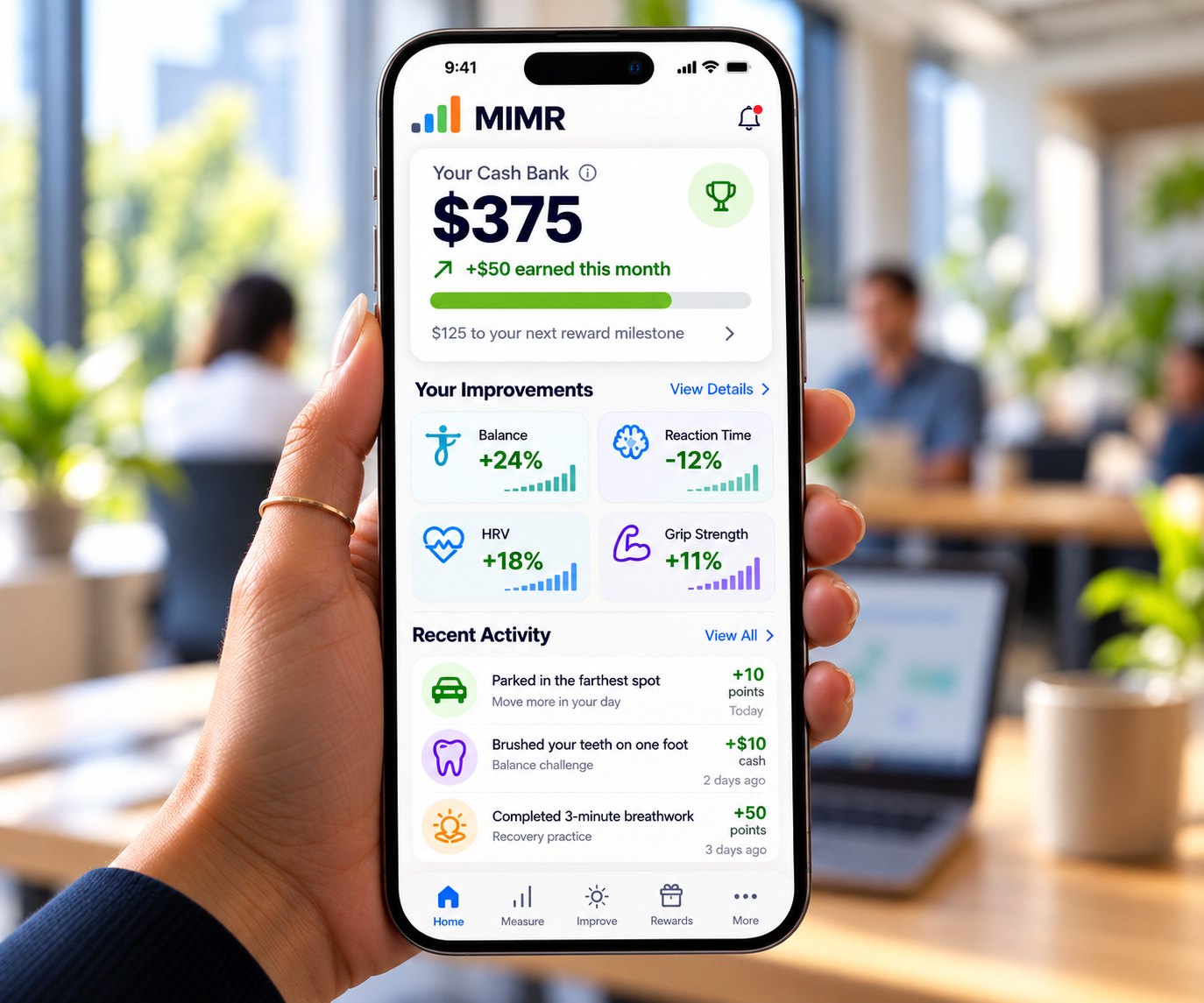
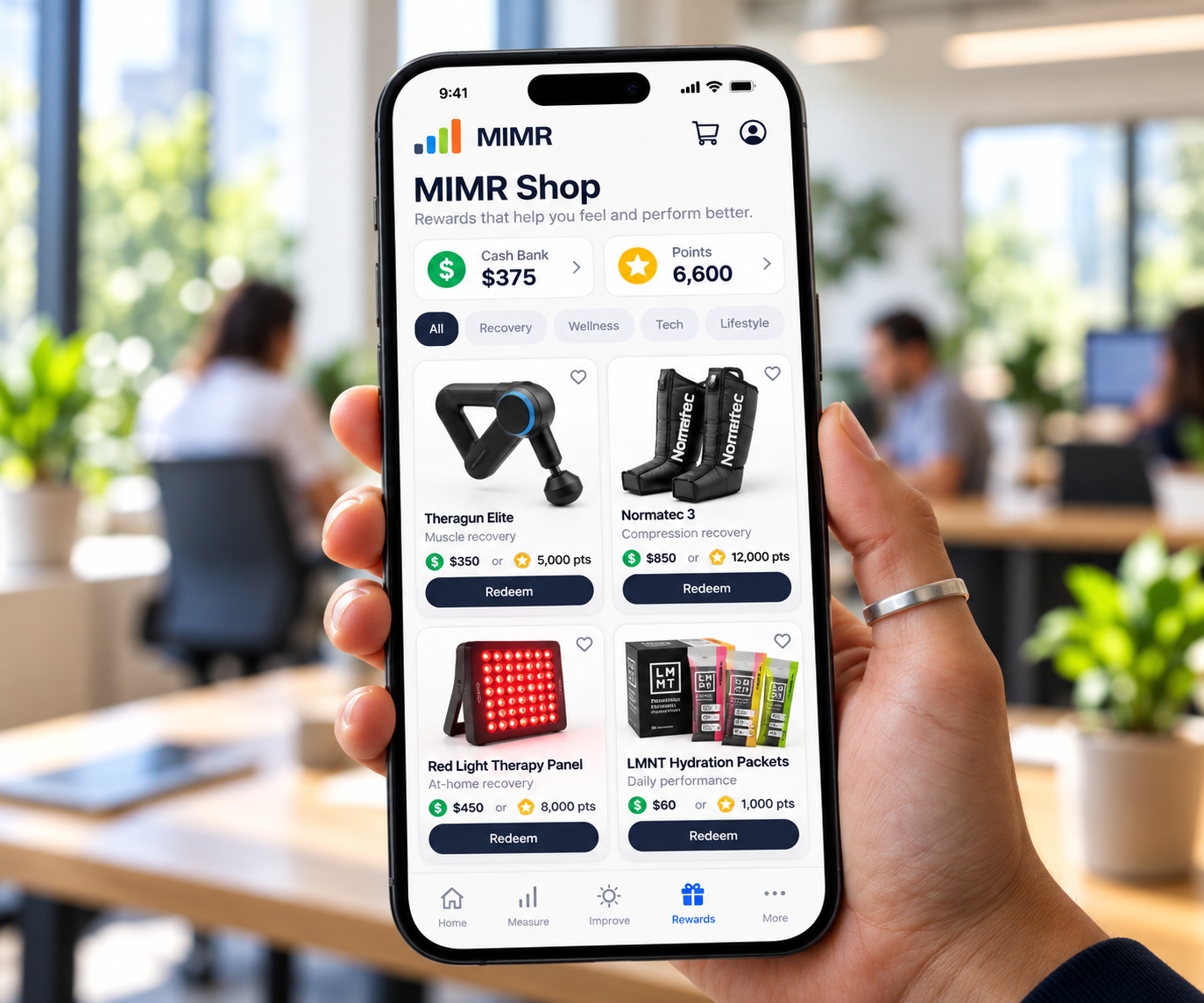
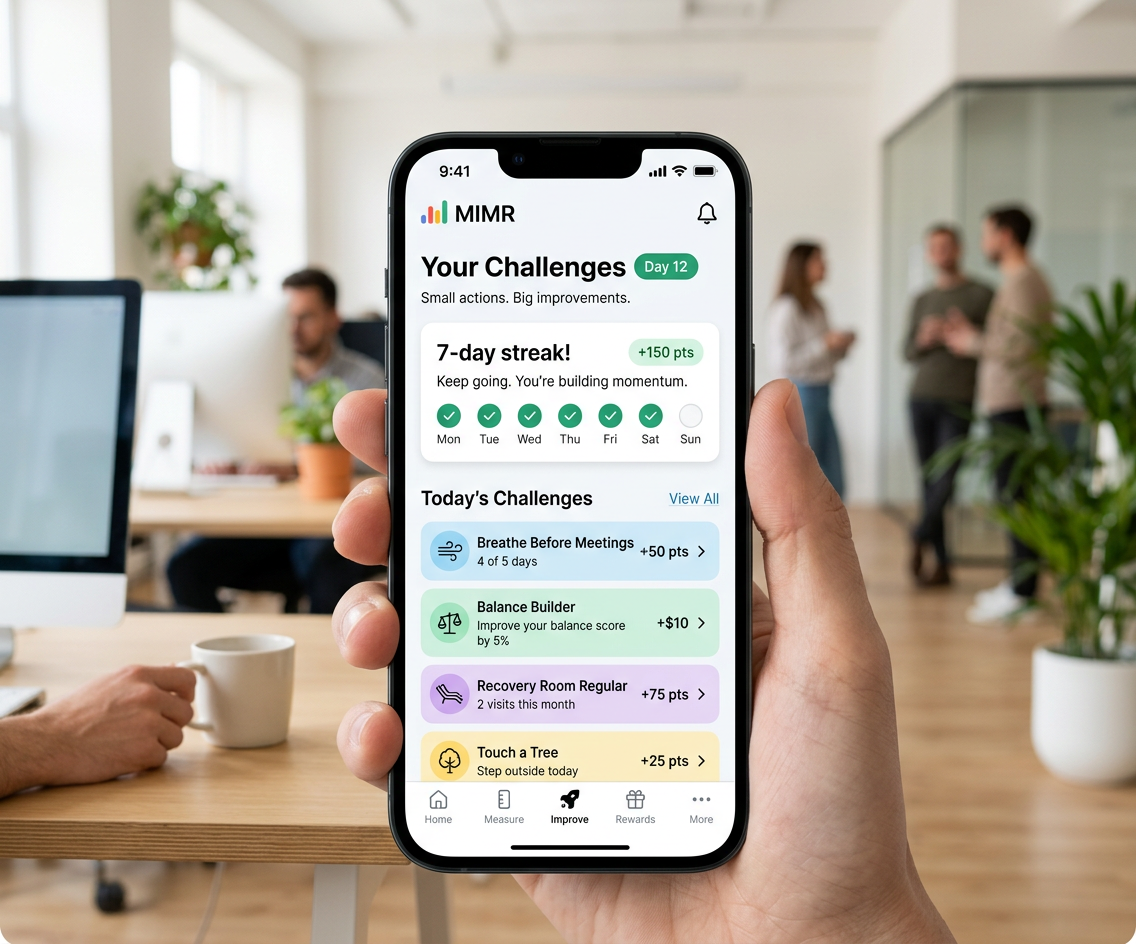
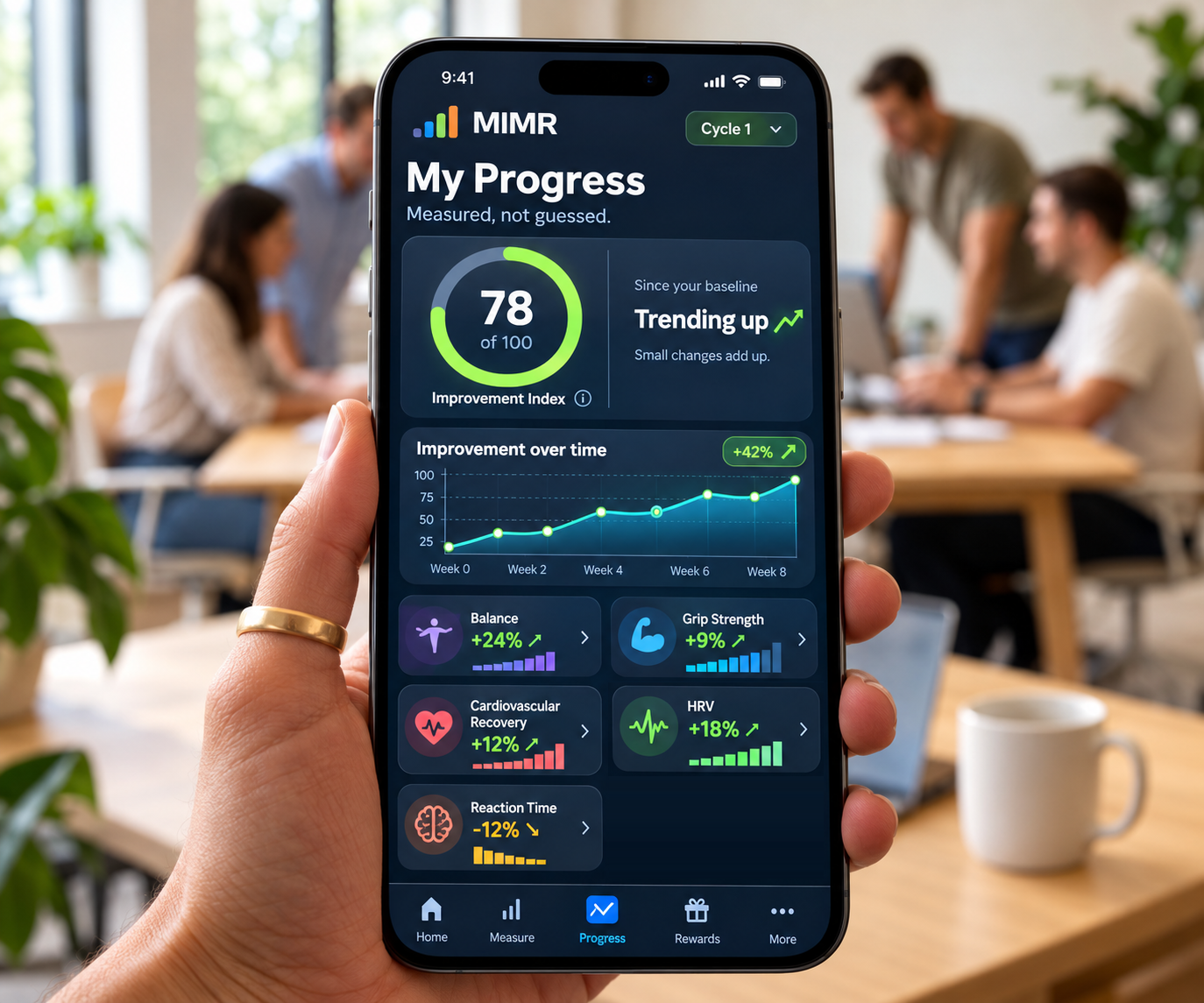
MIMR’s success depends on demonstrating meaningful improvement in your workforce.
Clear earning rules. Rewards included. Progress employees can see.
MIMR isn’t just about improving individual health. It’s about creating a workplace where people feel connected, appreciated, and part of something bigger.
From spontaneous coffee chats and walking clubs to celebrating the office Dog of the Day, MIMR turns everyday moments of connection into rewarding experiences.
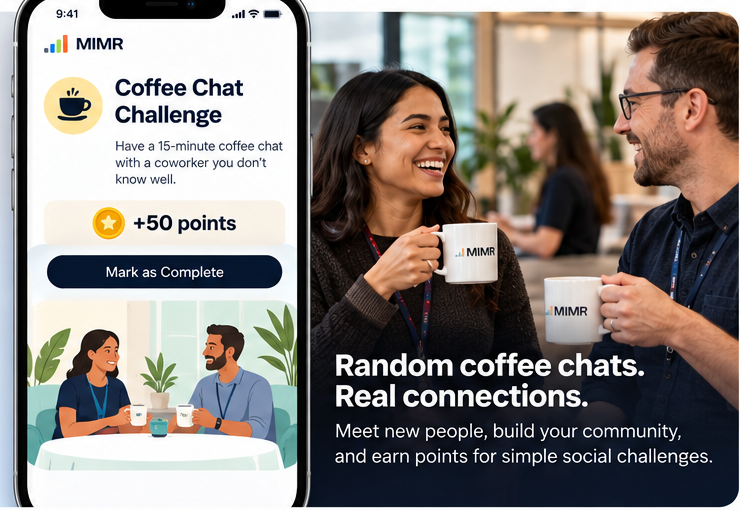
Have a 15-minute coffee chat with a coworker you don’t know well. Meet new people, build your community, and earn points along the way.
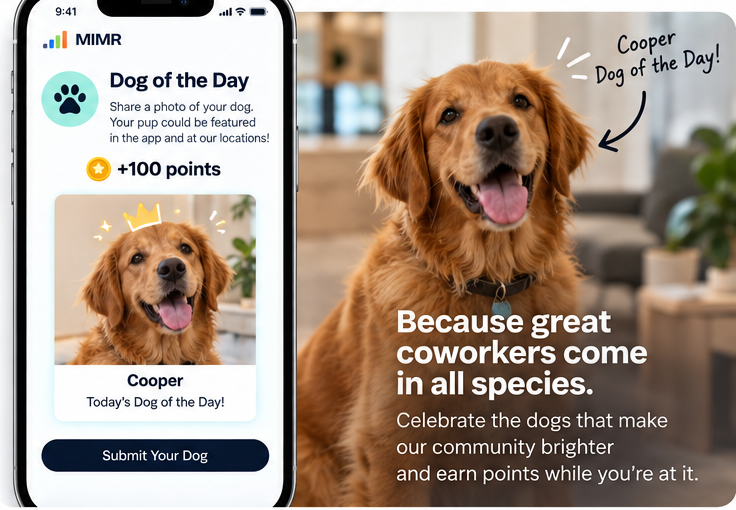
Share a photo of your dog for a chance to be featured in the app and at MIMR locations. Today’s honoree: Cooper the golden retriever.
Why should employee wellbeing be different?
MIMR is being built to give employers a more meaningful way to support employee health and human performance, while giving employees something traditional wellness programs often struggle to provide: visible personal progress.
MIMR handles room design, build-out, equipment, and session staffing. Your company provides a suitable space, and we assess it with you before launch. The design and build-out are included in the program, with no separate charge.
Every room delivers the same core MIMR equipment and protocols. The layout and aesthetic adapt to your available space and existing workplace, creating a consistent MIMR experience across different offices.
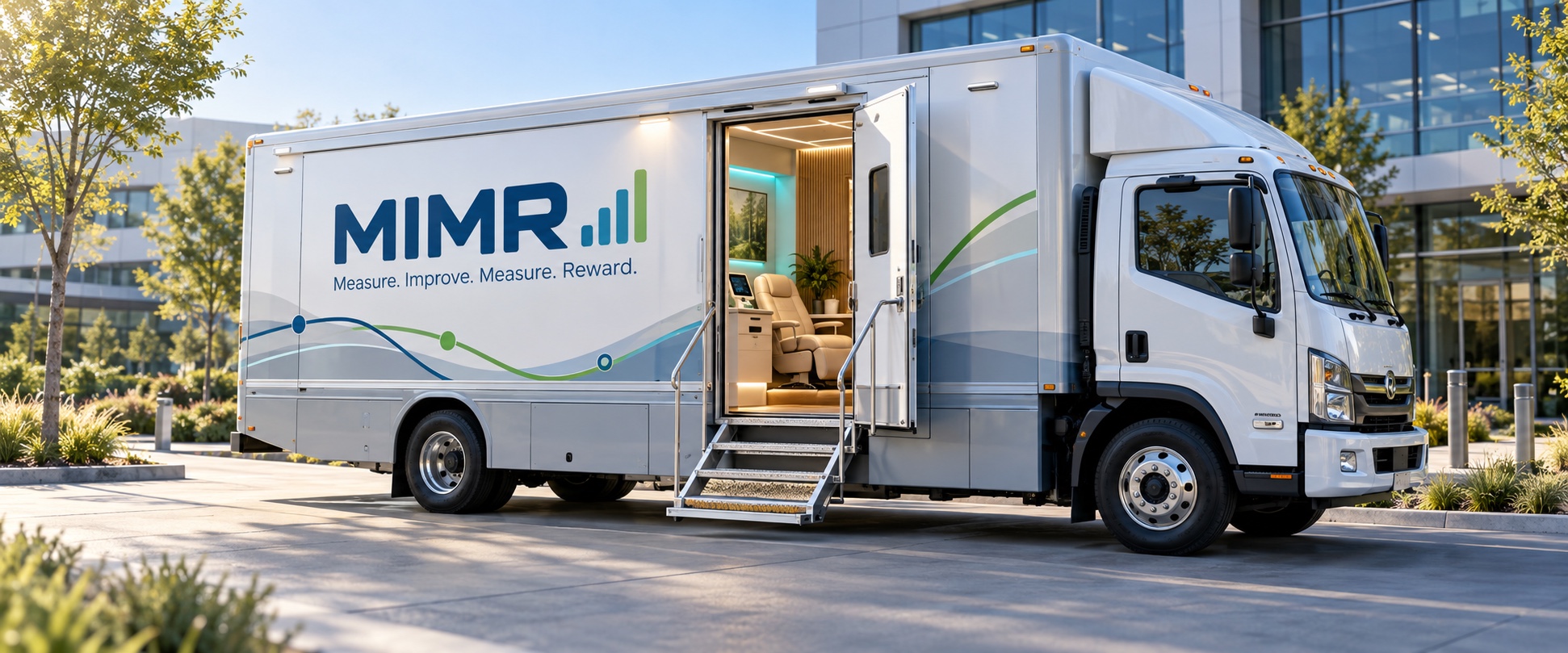
Many companies have people across several sites, and every employee should get the same opportunity to improve. MIMR can place a Recovery Room at your main office and serve other locations with scheduled Pop-Up days, bringing portable measurement and recovery equipment to a conference room. Every location follows the same measurement protocol, so progress is comparable wherever people work. Looking ahead, we’re developing MIMR on Wheels: a mobile Recovery Room that brings the full experience to any location with a parking space.
The employer funds rewards through the program price, and MIMR handles tracking and administration. Employees earn participation points and cash rewards for measurable improvement. Reward opportunities and earning rules are explained before launch.
The program price stays the same regardless of the rewards earned. Unearned reward amounts never go back to MIMR or the employer. Instead, they fund a Community Pool for that workforce, reinvested in shared experiences like recovery days, guest speakers, and Surprise Days. Earned dollars reward individual improvement. Unearned dollars strengthen the whole team.
MIMR is being designed to give employers aggregated group reporting rather than individual health results. Reporting safeguards, including minimum group sizes, are intended to help protect employee identities. Specific data access, consent, and privacy practices will be documented before a pilot begins.
HIPAA’s applicability depends on how the program is structured and the roles of the organizations involved, including whether it operates through a group health plan. MIMR’s applicable obligations and data-handling arrangements will be reviewed before launch. Employee privacy remains a design priority regardless of whether HIPAA applies.
MIMR’s program design will account for room accessibility, different abilities, and health limitations. Before launch, we will establish accommodation procedures and alternative participation and reward pathways for employees who cannot complete a particular activity or measurement. These arrangements will be reviewed for applicable ADA requirements.
Yes. Participation is voluntary. MIMR’s approach is to make the experience convenient, appealing, and rewarding. Employees choose whether to participate.
The pilot is deliberately focused. The vision is much bigger.
MIMR is designed to evolve.
We start with simple, measurable interventions that can be delivered consistently at work. Then we keep exploring: new recovery technologies, preventative health services, surprising experiences, and carefully designed experiments that may help people feel and function better.
We don't assume what works. We measure it.
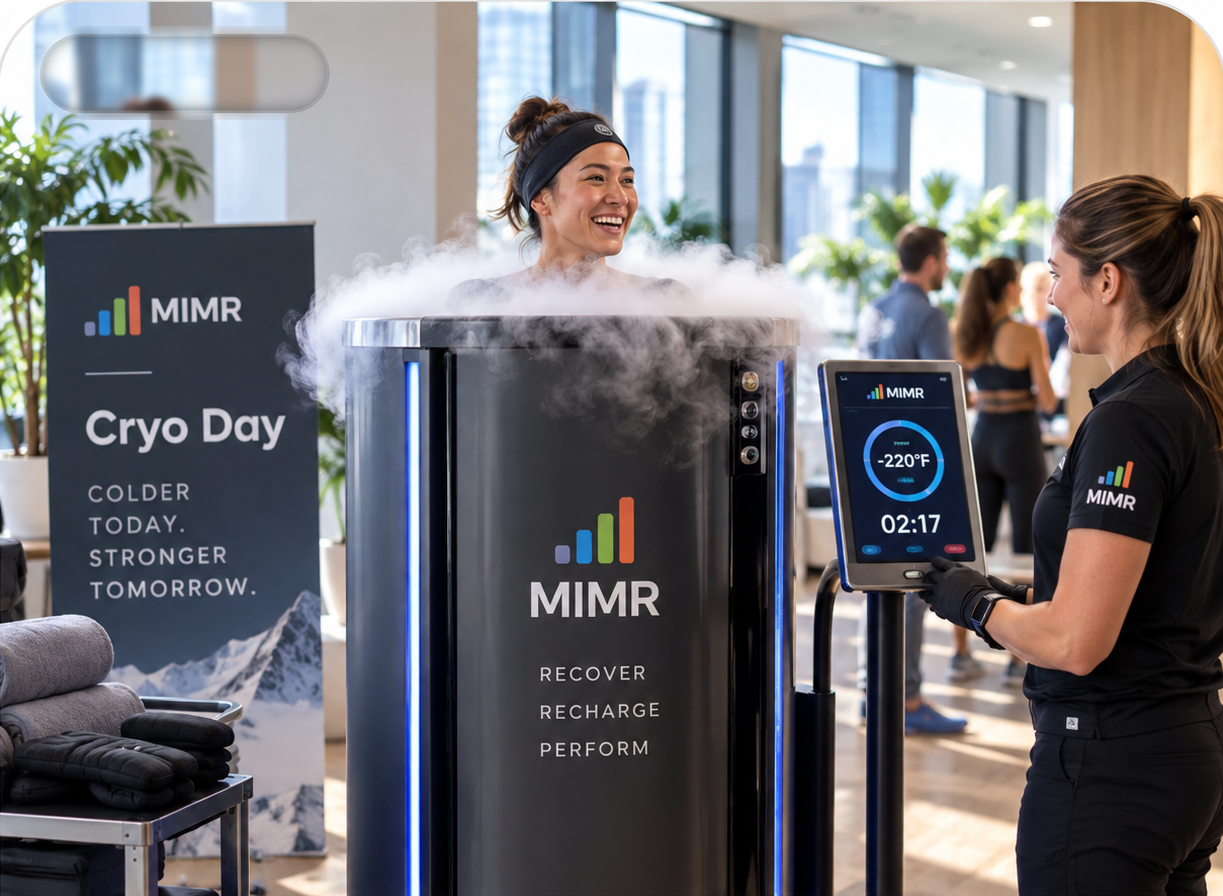
ExploringBring advanced recovery experiences directly to work.
 Future Phase
Understand one of the most important inputs to health and performance.
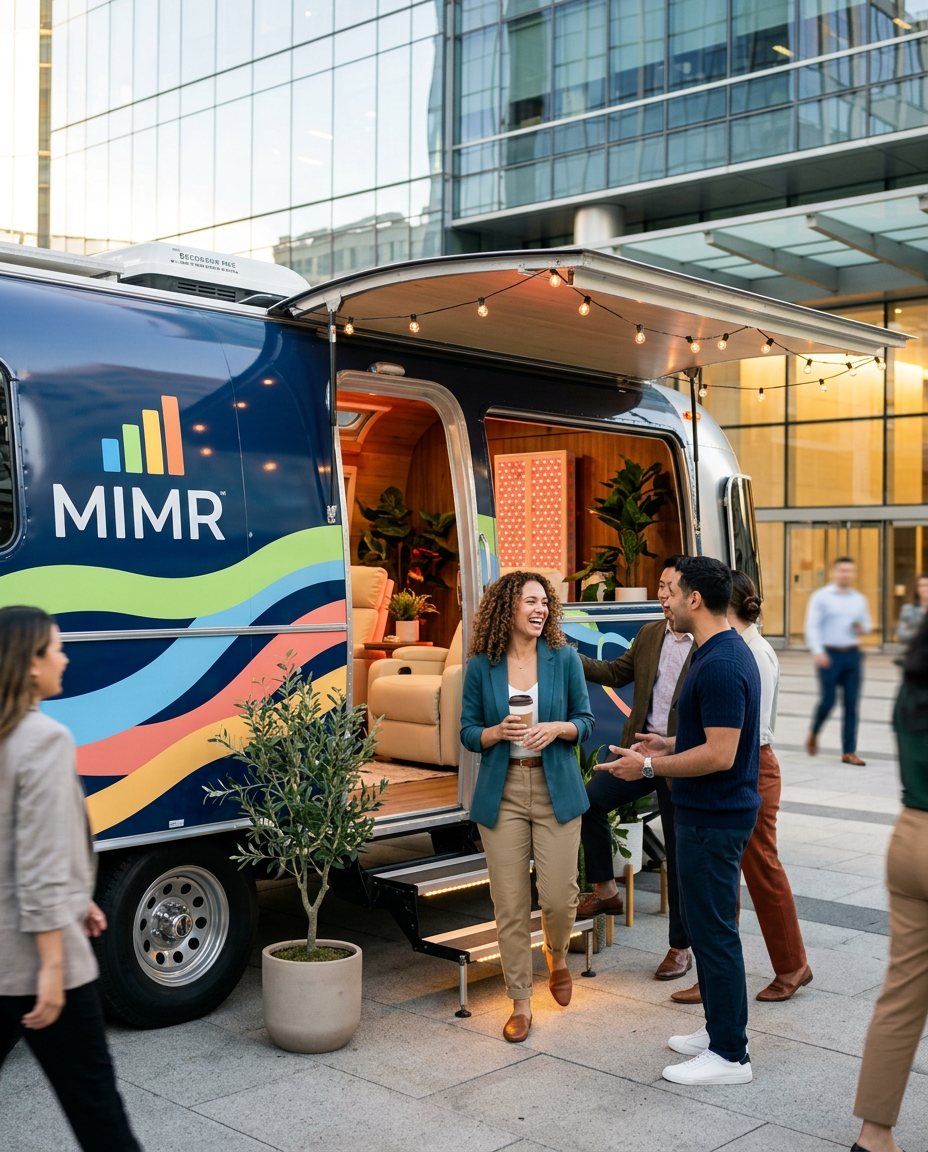 Future Phase
Bring advanced technology and experiences from workplace to workplace.
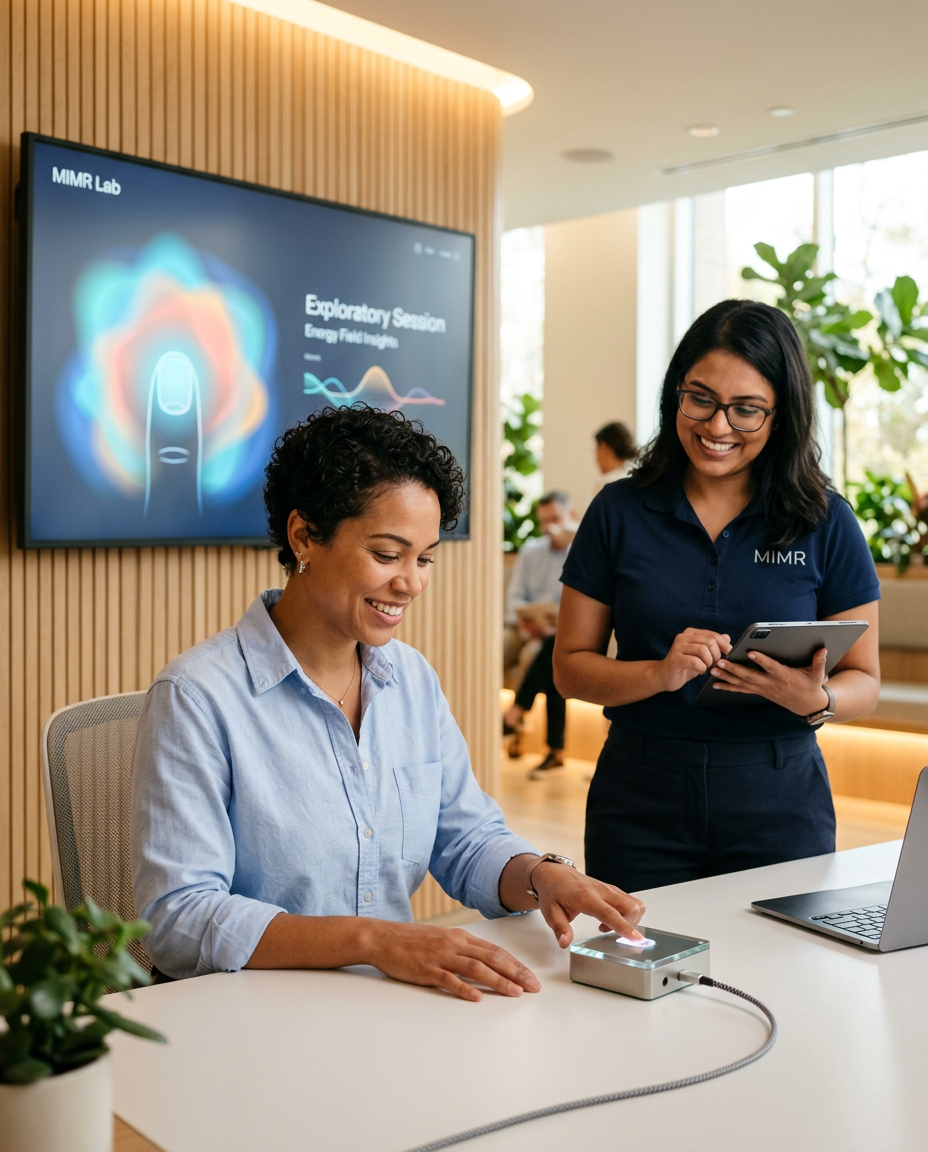 MIMR Lab
Test intriguing ideas. Measure what happens. Follow the evidence.
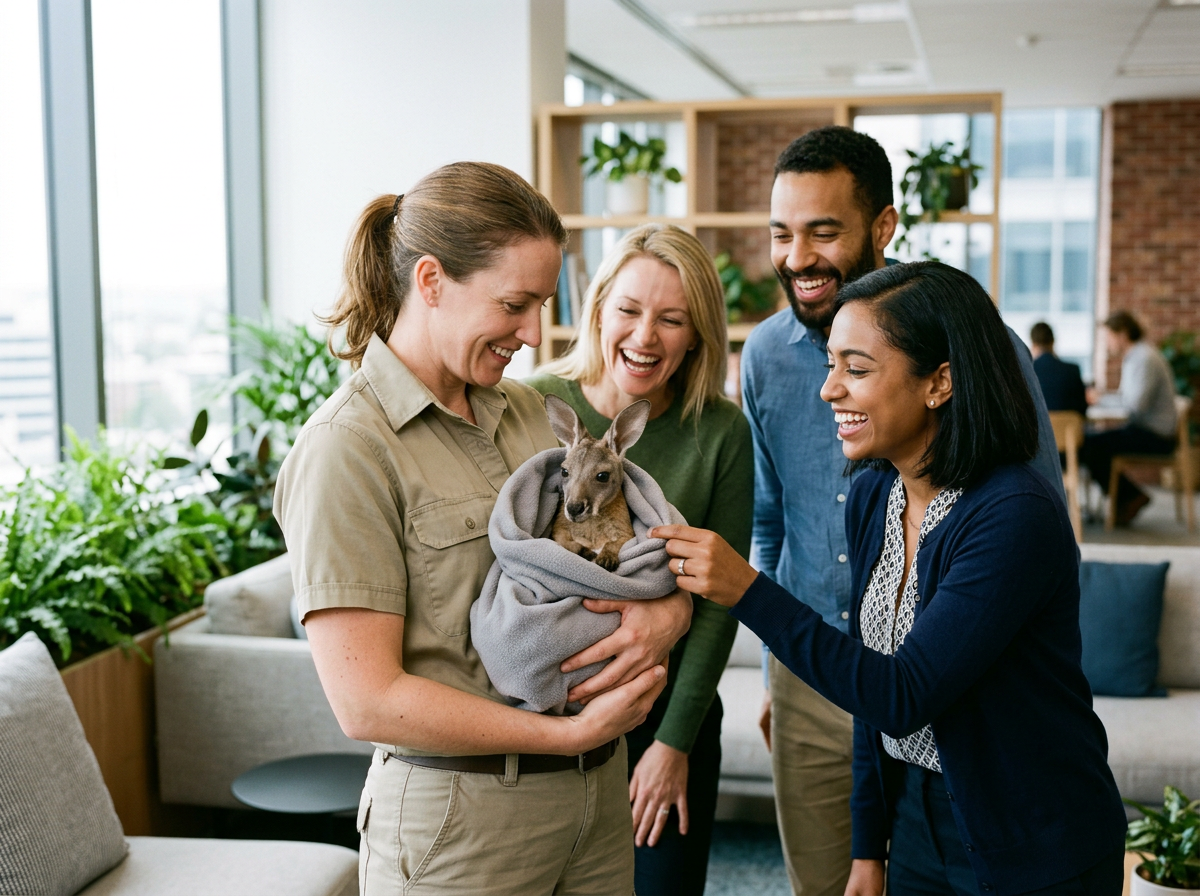 Culture + Joy
Golf simulator days, surprise visits, and employee spotlights. Because sometimes feeling better starts with something completely unexpected.
Try something. Measure what happens. Keep what works.
Concept renderings. Future experiences will be added only when they can be delivered safely and their impact can be measured.
For generations, employers have helped people access healthcare. Then came wellness programs, designed to help people stay healthy. The next step is measurable improvement.
Most people will never have a performance coach or a team measuring how their bodies and minds change over time. But millions of people go to work every day.
MIMR is looking for a small number of employers to help shape an early pilot.
Explore a MIMR PilotThe Science of Improvement is where MIMR gets curious out loud — a running collection of essays on the science of measurement, recovery, and human performance. Half laboratory notebook, half magazine.
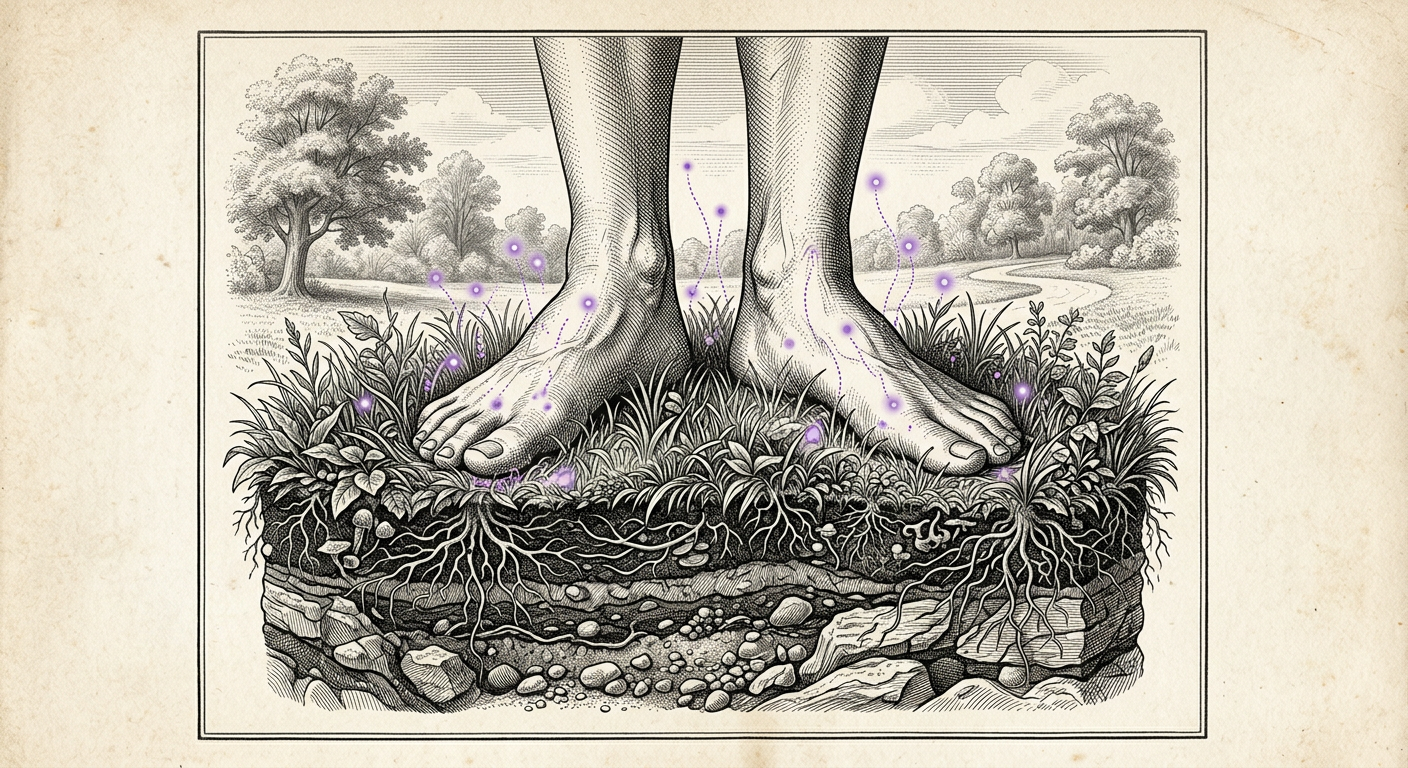
The science of earthing, what the experiments actually show, and the bigger question it raises: what else might the Earth be doing for us?
Read
One sound. One breath. One word. The surprising science of tiny improvements.
Read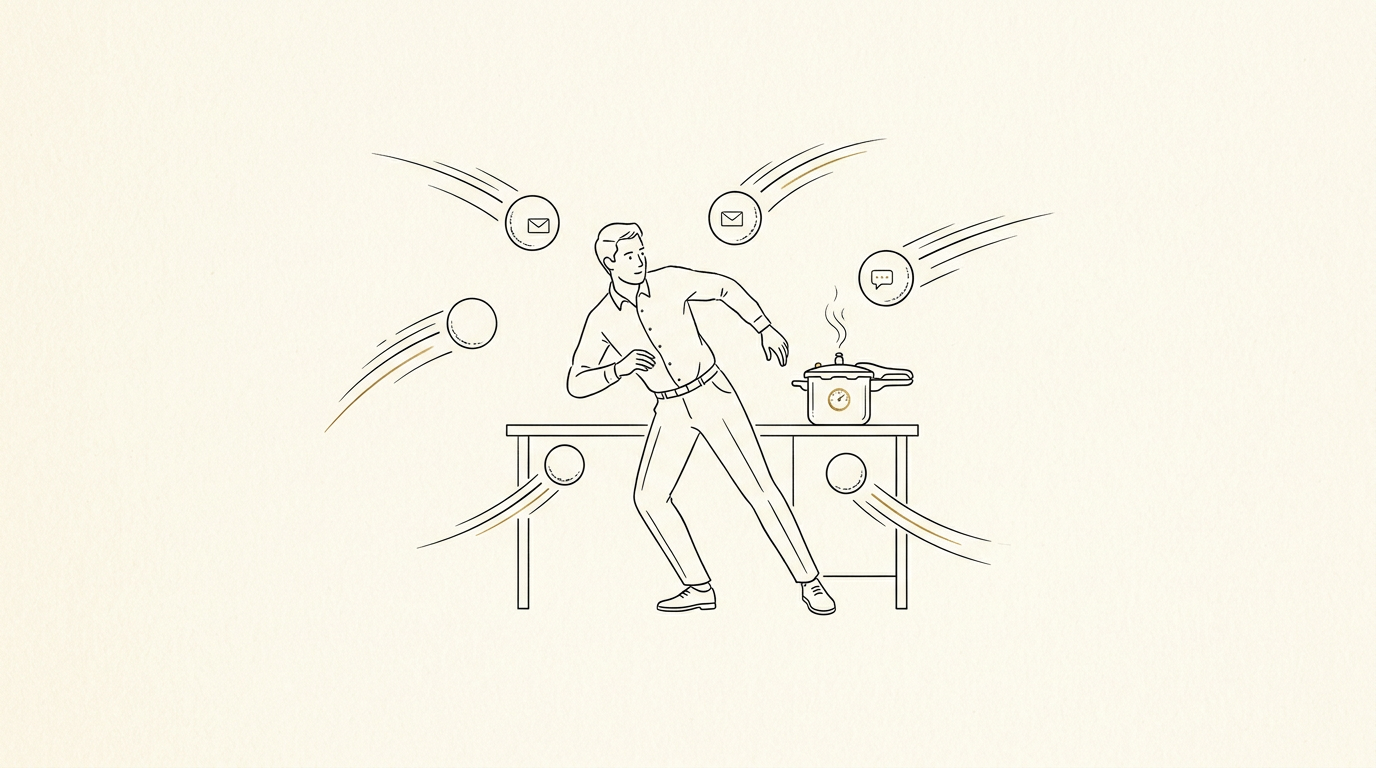
Interruptions, AI anxiety, and rising expectations are turning workplaces into pressure cookers. The scary part is how well they seem to be working.
Read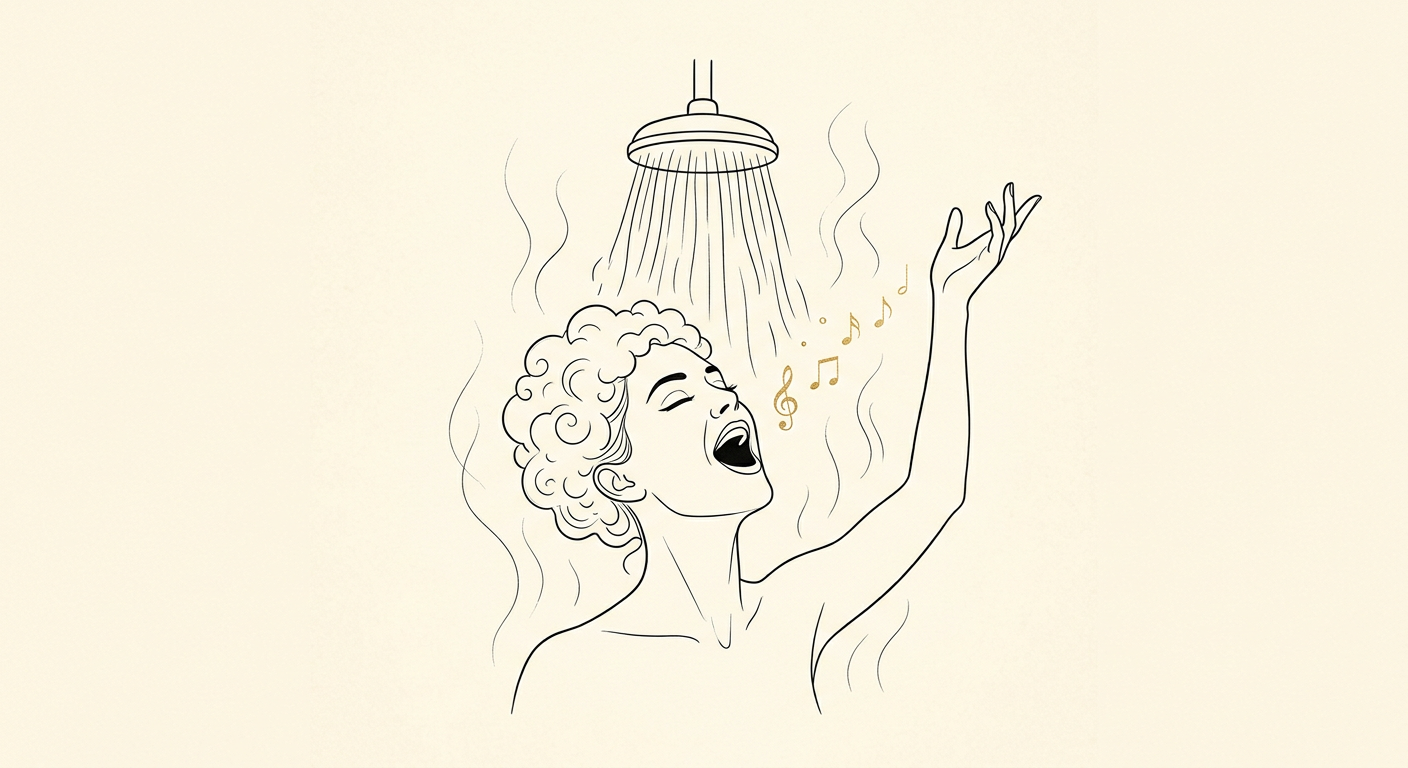
Why singing about shampooing your hair might help you remember that you actually did it.
Read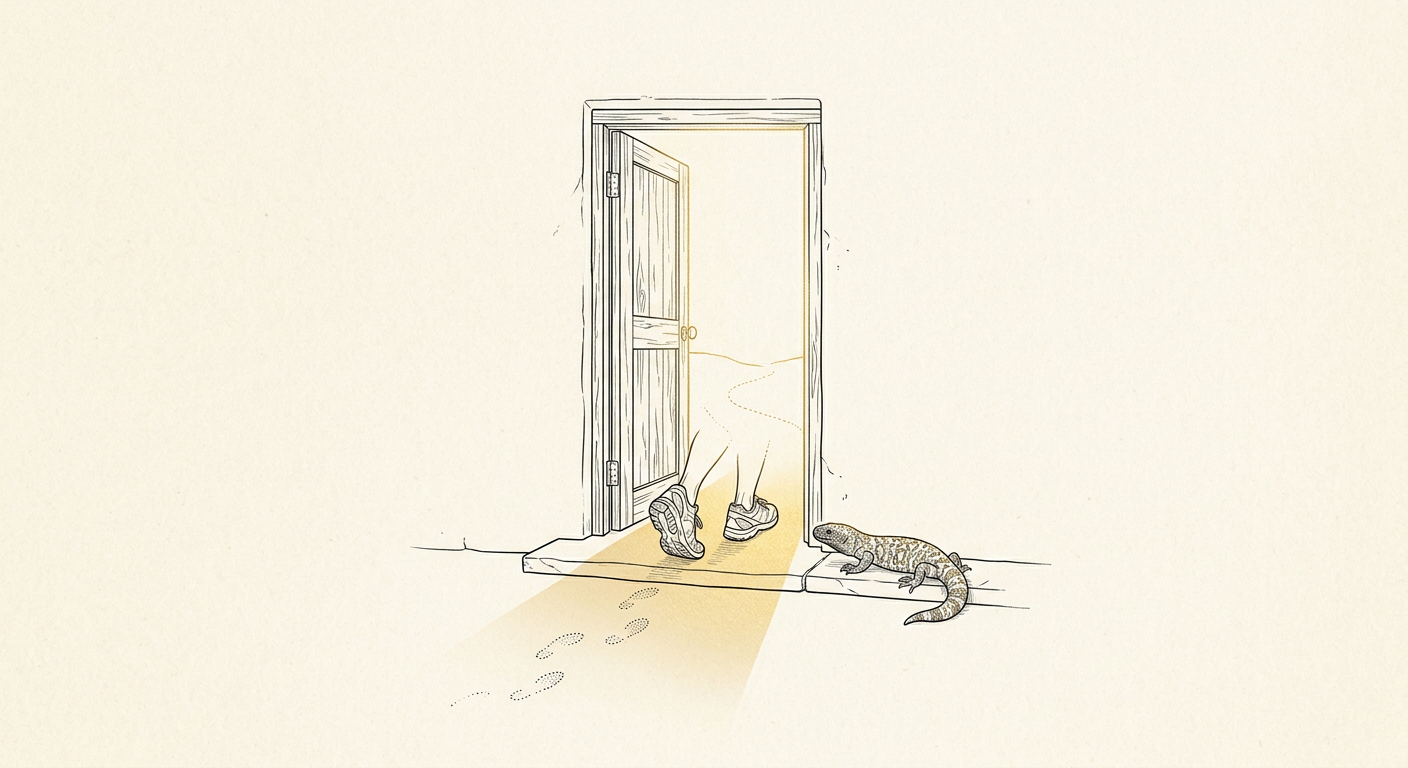
Weight-loss medications are a genuine breakthrough. Here's why they work even better with a partner.
Read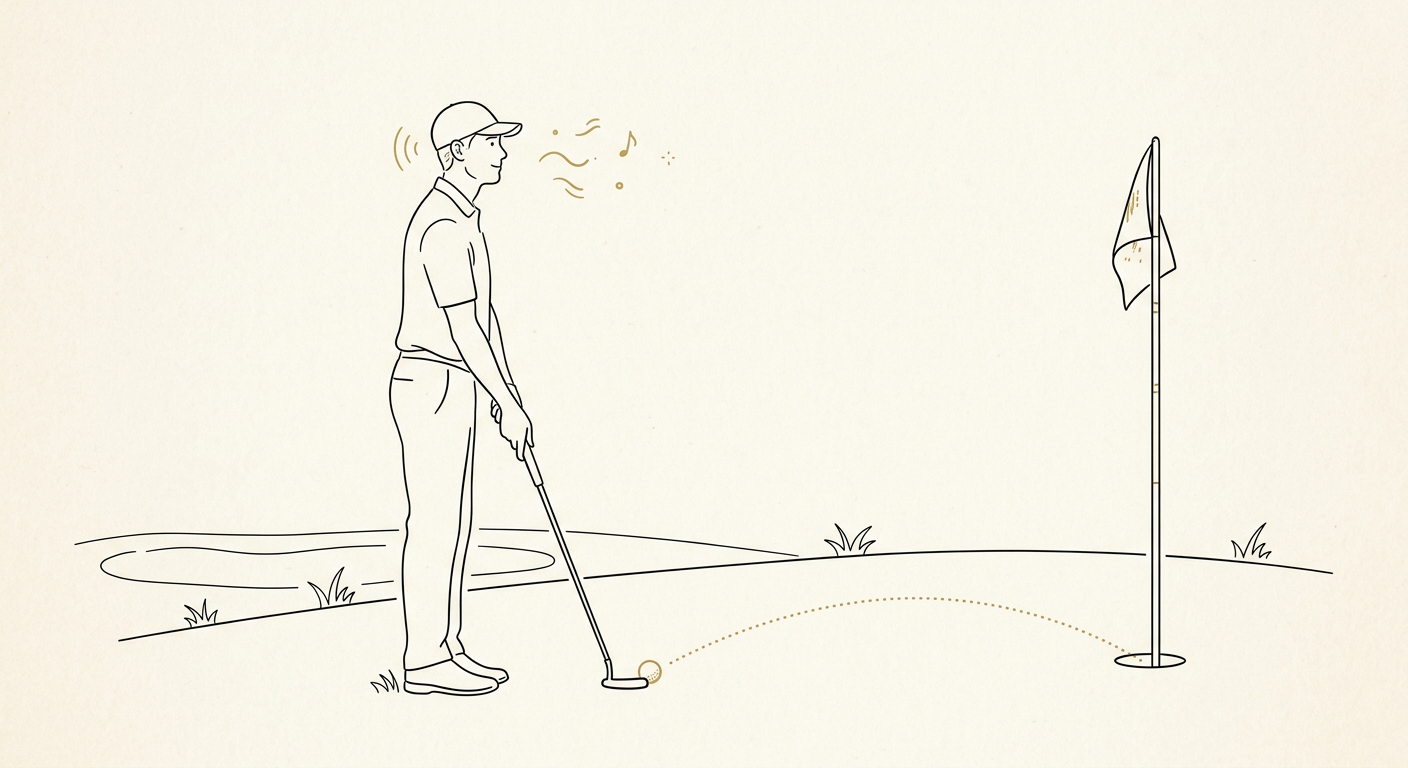
The surprising science of why your brain sometimes performs better when you get out of its way.
Read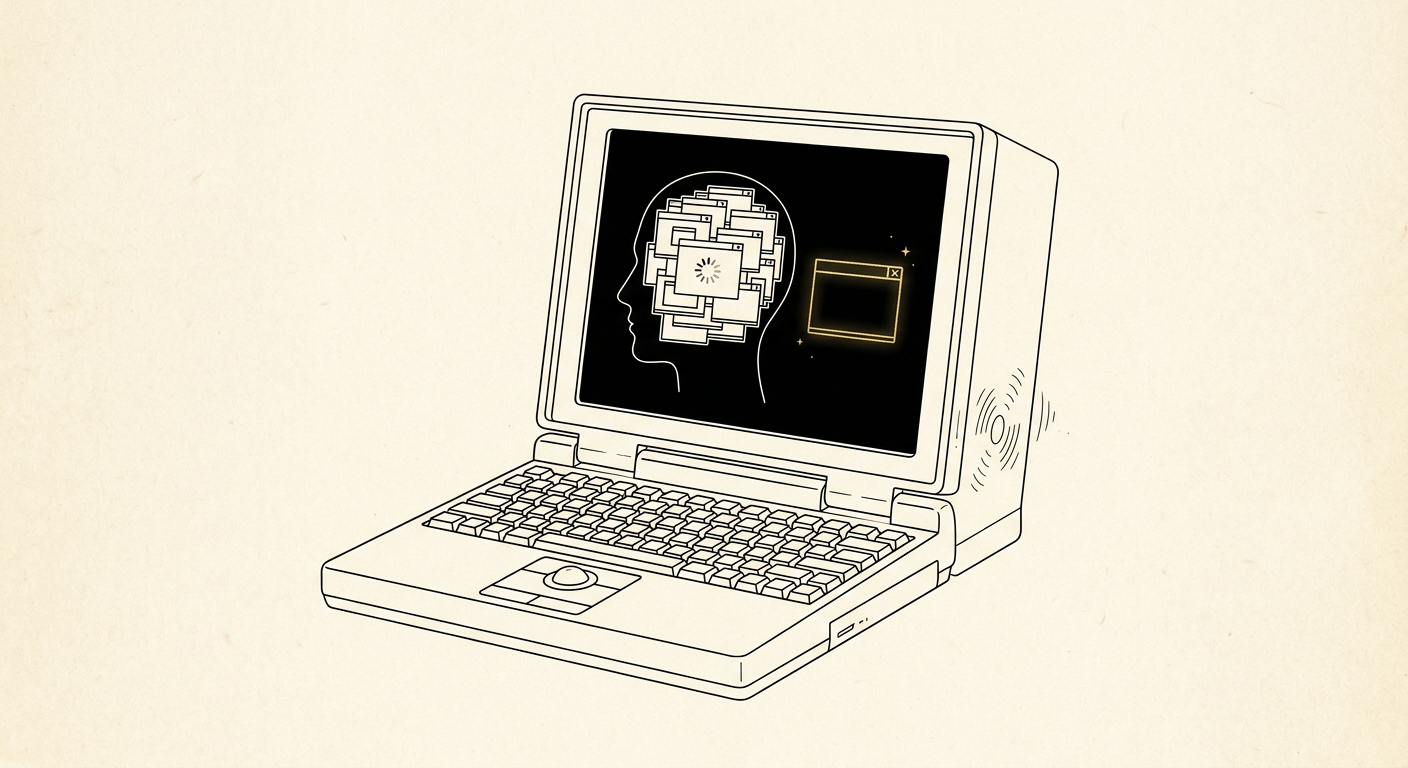
Why your mind sometimes feels like an old laptop, and how to close the programs running in the background.
Read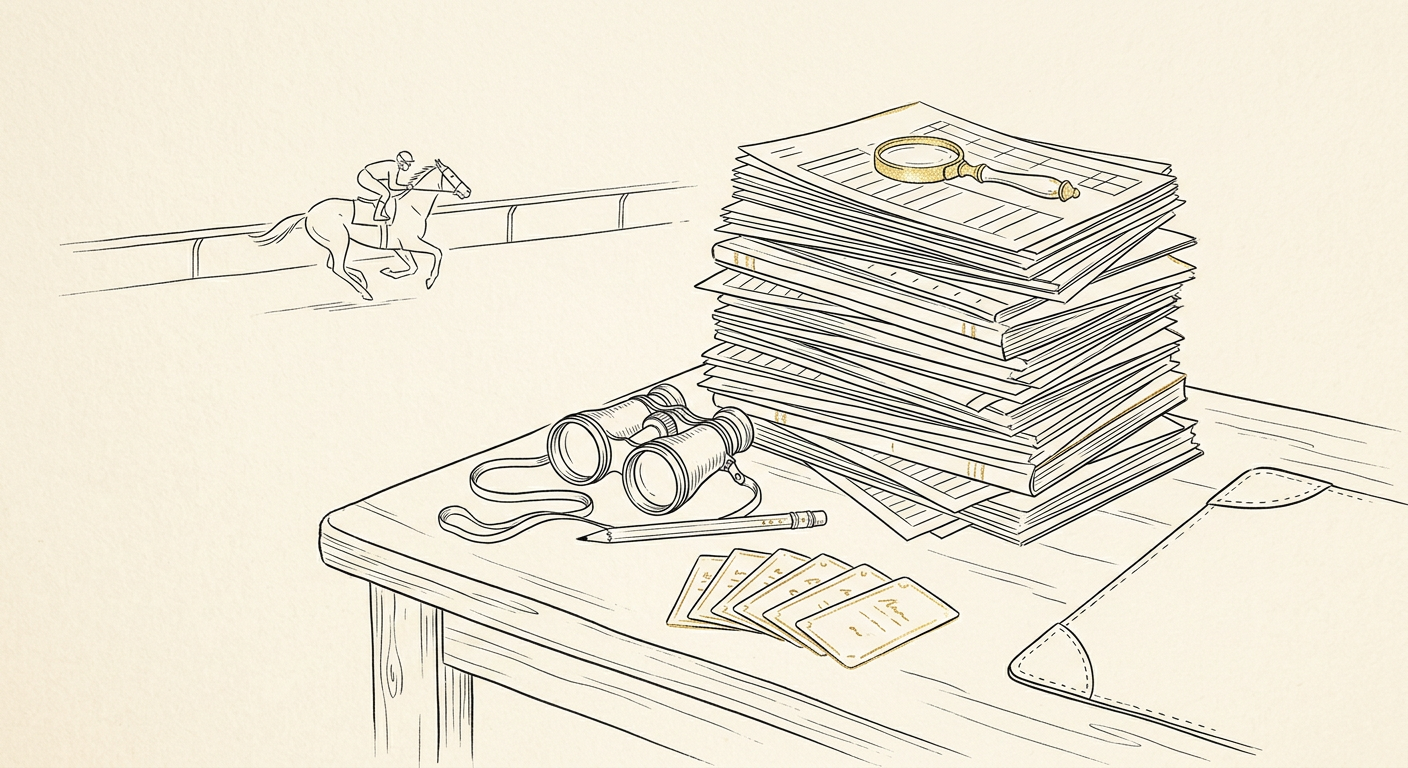
Expert horse handicappers were given more and more information. Their confidence soared. Their accuracy didn't move.
Read
Why humans are surprisingly bad at imagining what would make their lives better.
Read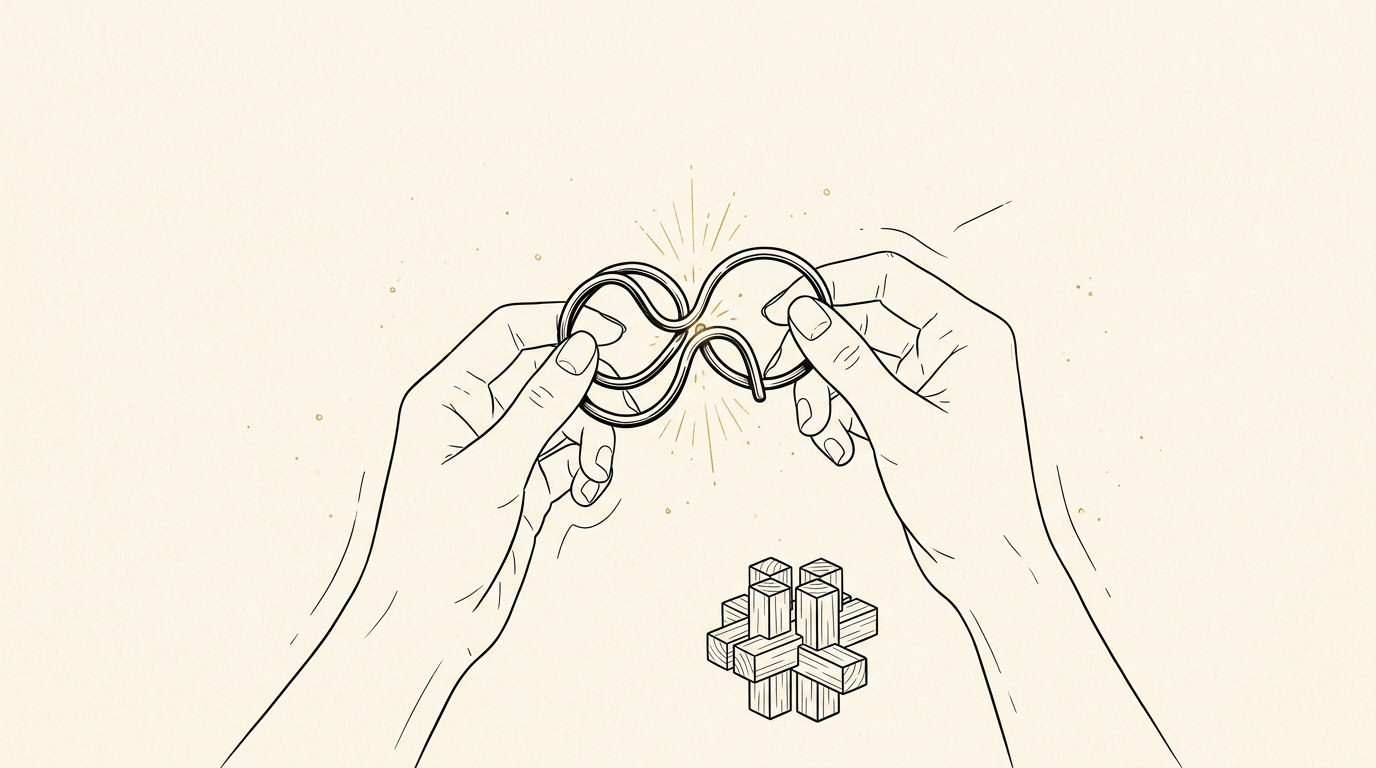
The psychology of unfinished business, and why a problem you almost know how to solve is so hard to walk away from.
Read
Why your environment may matter more than your willpower.
Read
A psychologist spent a decade studying lucky and unlucky people. The difference wasn't chance. It was what they noticed.
Read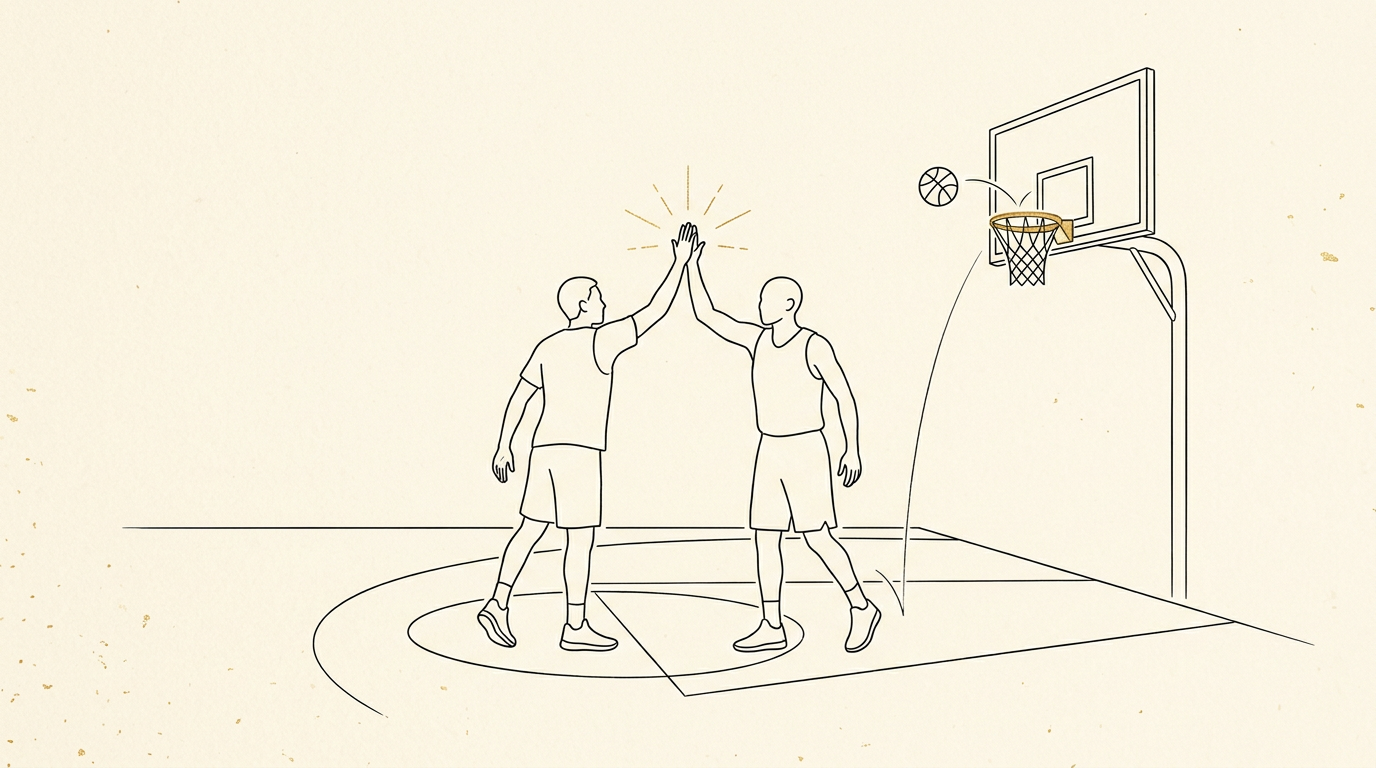
What Kevin Garnett knew about free throws, and what one NBA study suggests about the small signals that make teams better.
Read
Same shake. Same calories. Different hormonal response. What two small experiments reveal about how expectations shape the body.
Read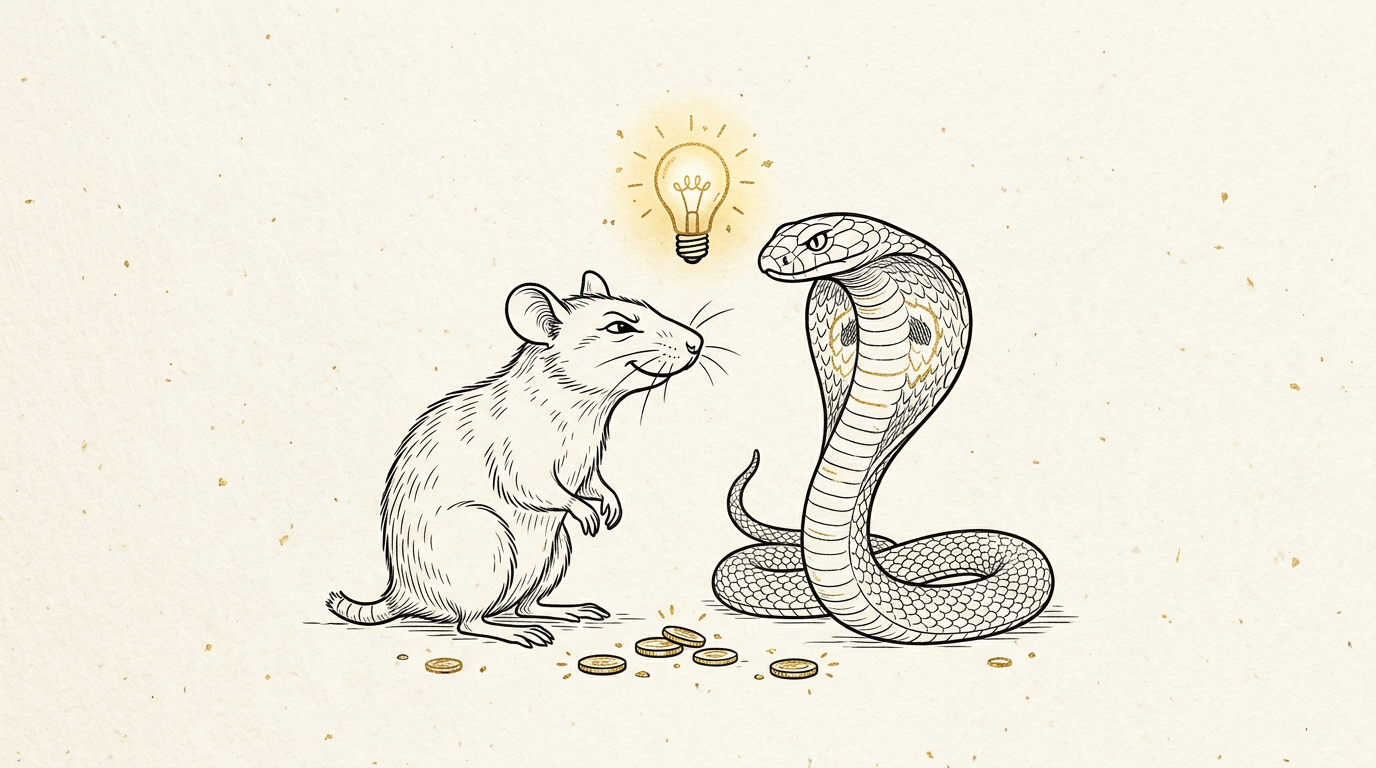
Why every scoring system invites gaming, and what we’re doing about it.
Read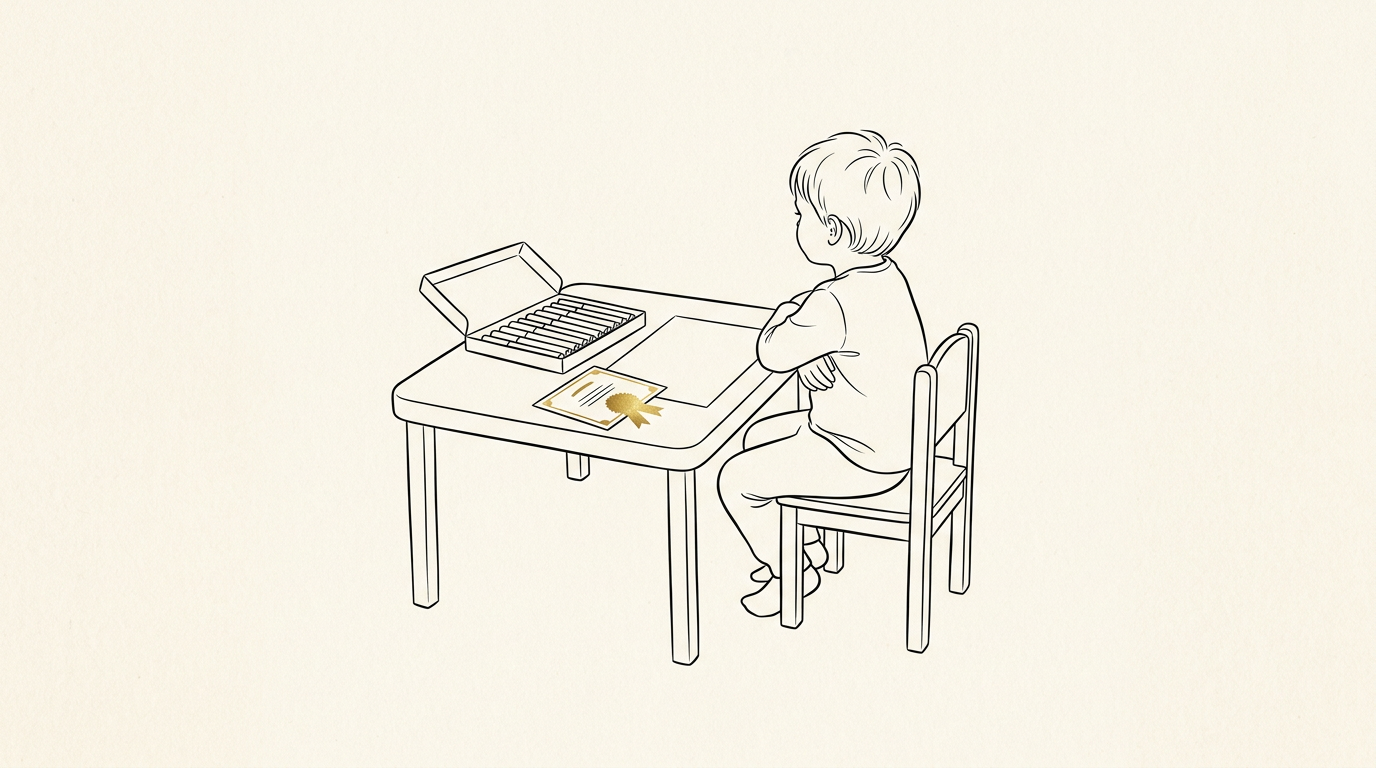
What happens to motivation when you reward people for something they already enjoy.
Read
The first paycheck after a raise feels amazing. A season later, it's just your paycheck. Here's why, and why MIMR runs in 90-day cycles.
Read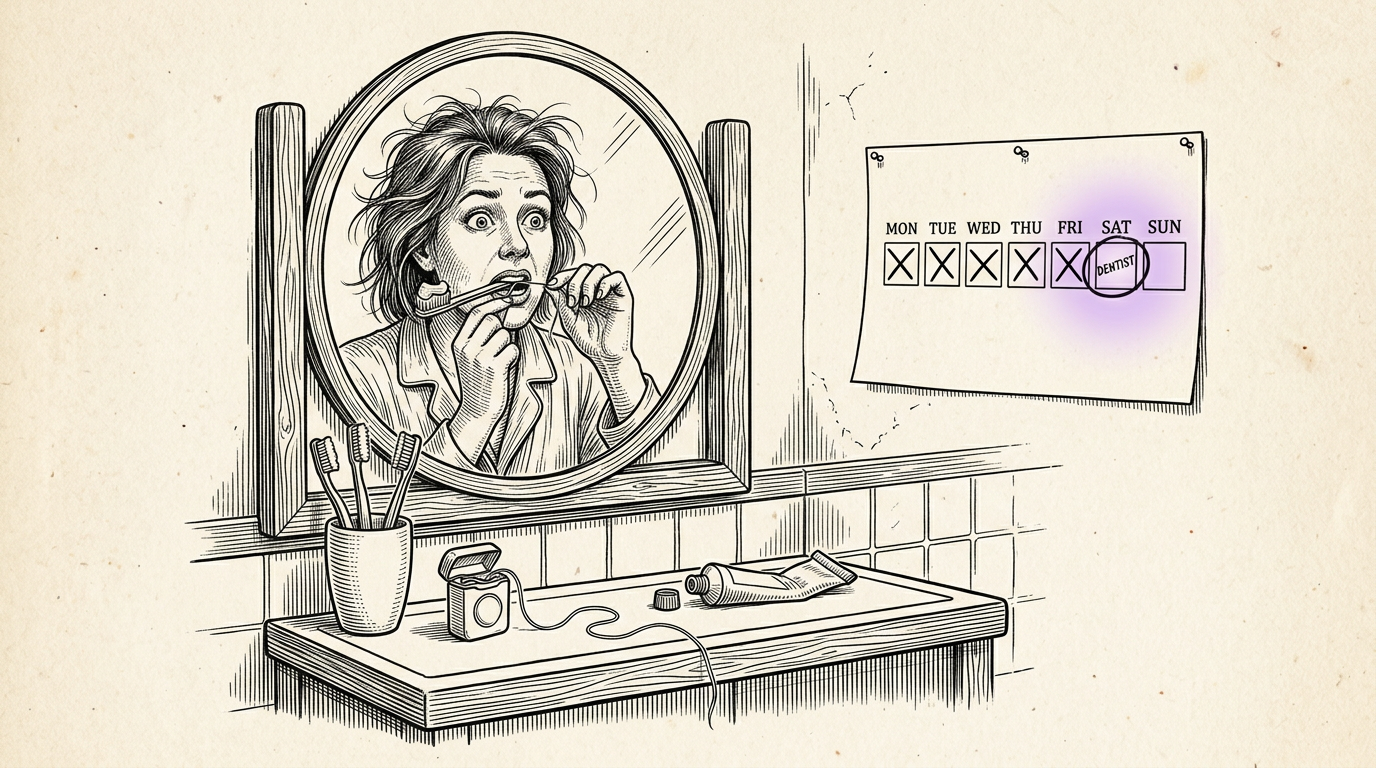
What happens to our behavior when we know a measurement is coming, and why your dentist can tell.
Read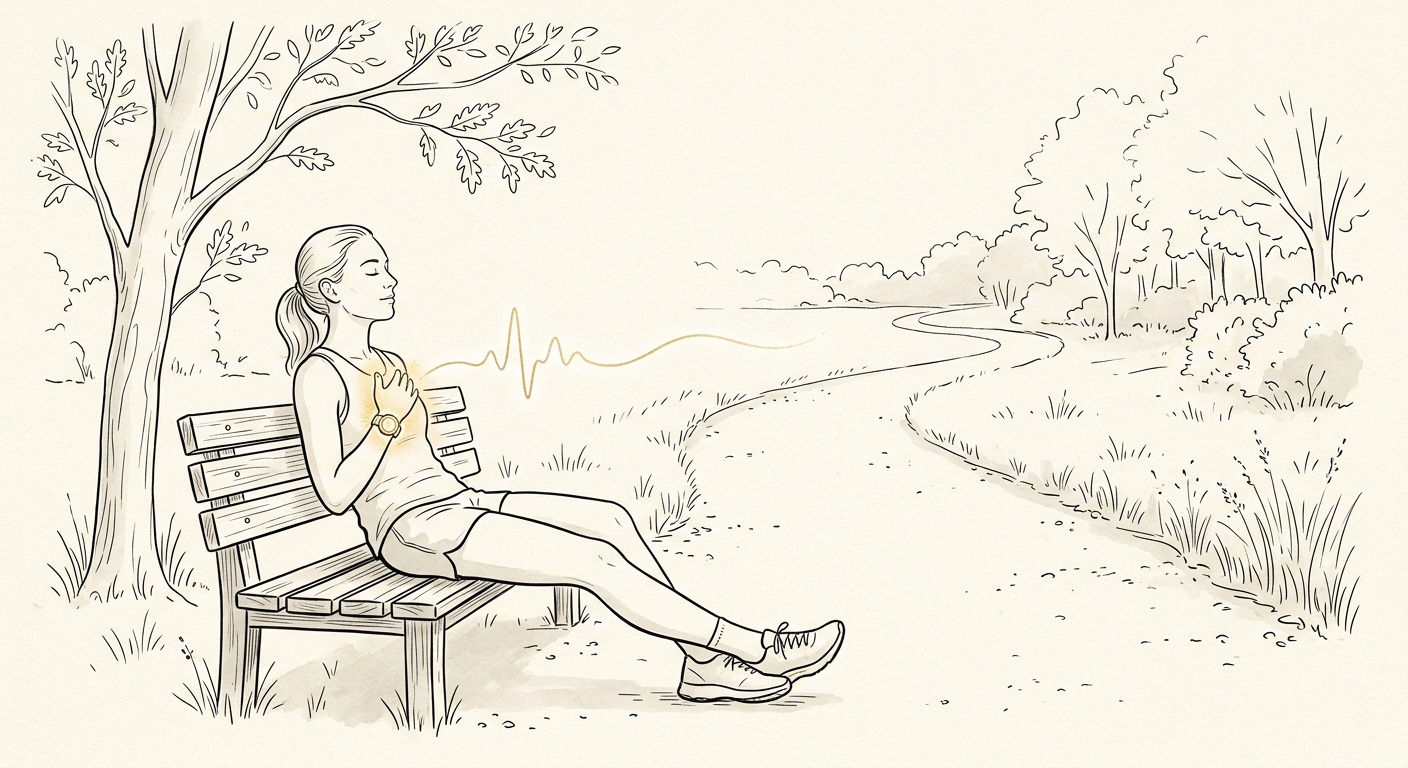
A perfectly steady heartbeat is a bad sign. Here’s what heart rate variability actually measures.
Read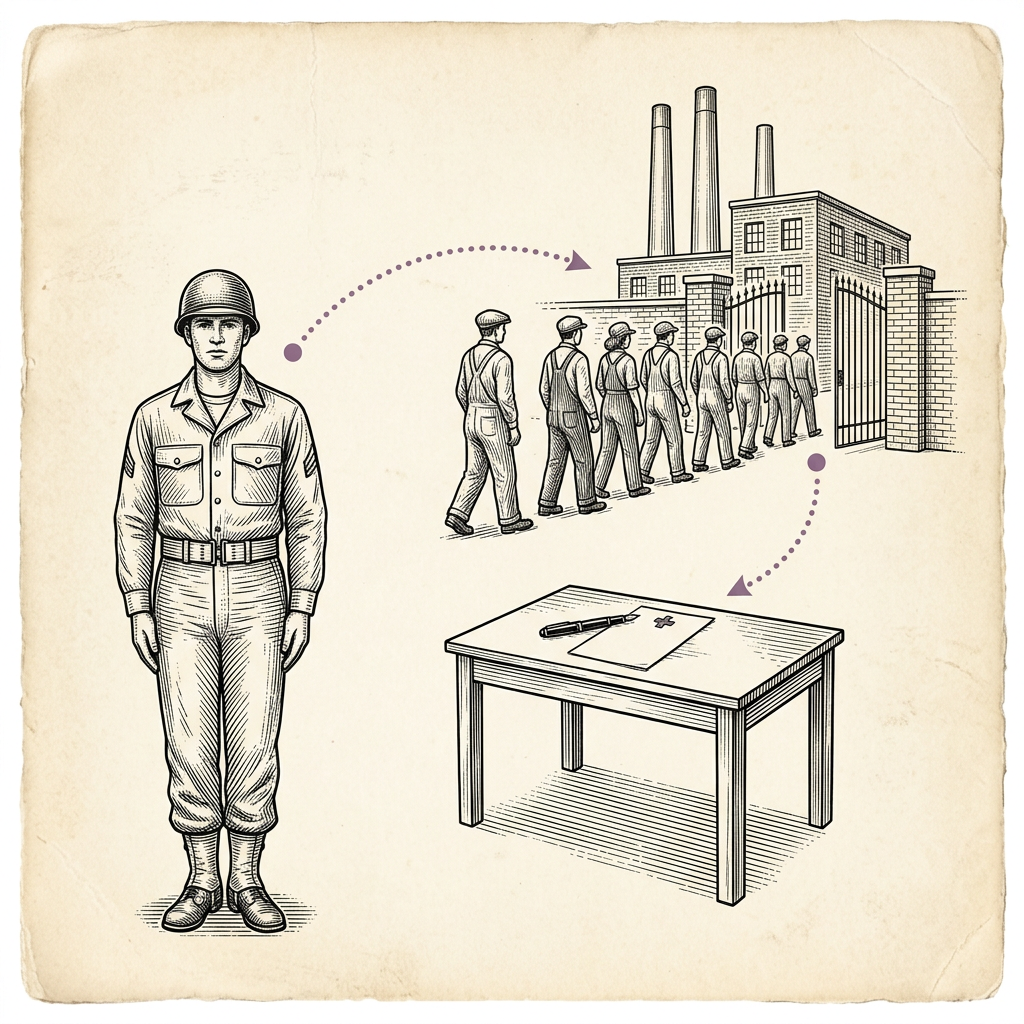
How workplace perks evolved from a wartime compromise into a toolkit for human performance.
Read